
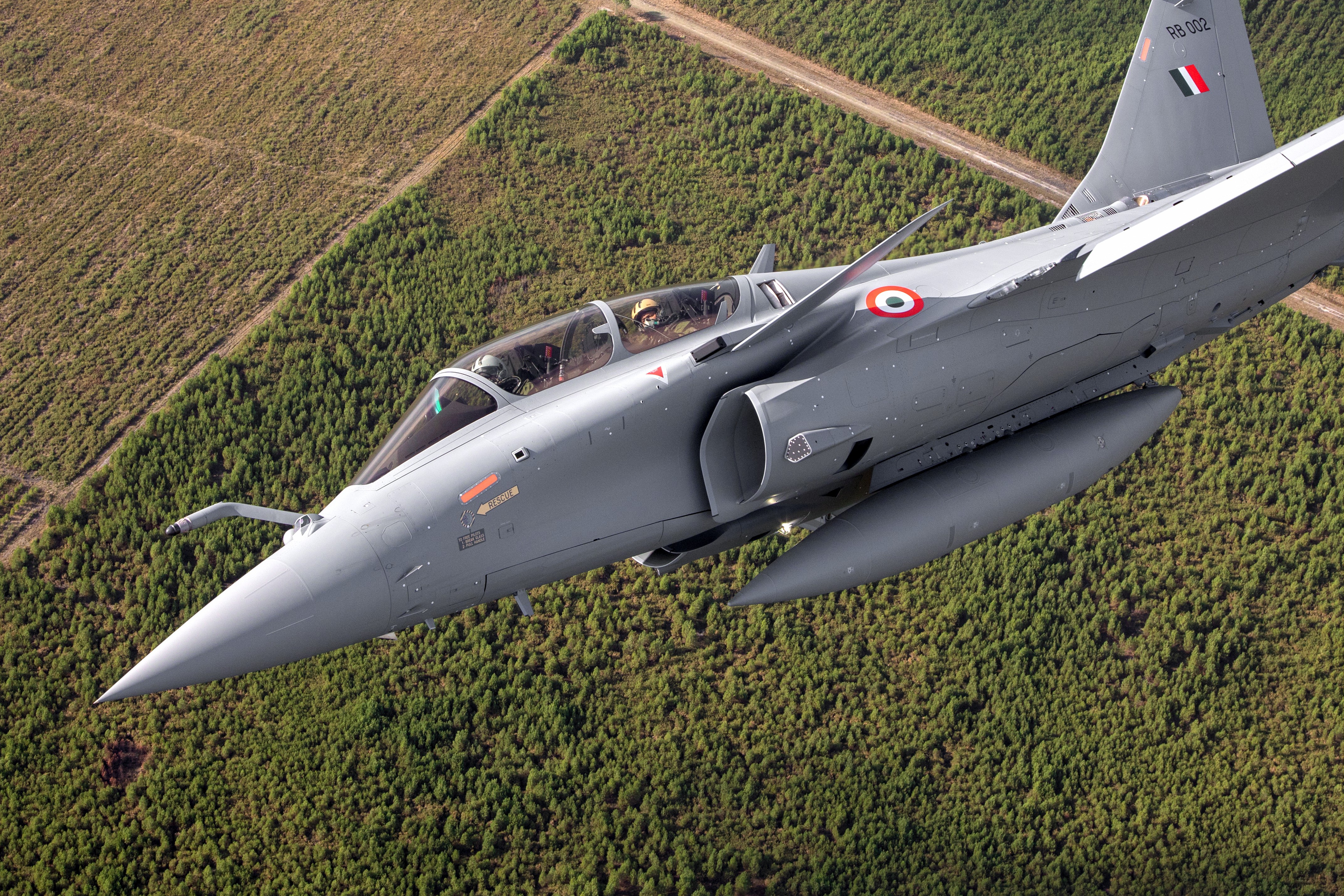
Indian Air Force
The Indian Air Force (IAF) is one of the largest air formations in the world. They were founded on October 8, 1932 and initially functioned as a small auxiliary unit under British rule. Over time, they developed into an extensive structure, which now has about 1700 aircraft and about 140,000 active soldiers. The IAF plays an important role in India's defence system and in maintaining the balance of power in South Asia and the Indo-Pacific region[1]. At the same time, attention is drawn to the relatively high percentage of air accidents involving Indian military aircraft over the years, which has been the subject of criticism and debate regarding the safety of operations and the modernisation of the fleet[2].
Beginnings and formation
The IAF was officially established as the Royal Indian Air Force (RIAF) on October 8, 1932. First Squadron, No. 1. IAF Squadron, was formed in April 1933, with only four Westland Wapiti biplanes and six officers trained at RAF Cranwell. During World War II, the RIAF grew to 10 squadrons, flying aircraft such as the Hurricane, Spitfire, and Vultee Vengeance in the Burmese and Arakan campaigns. In recognition of his merits, King George VI gave him the prefix "Royal" in 1945. After India gained independence in 1947 and divided the subcontinent, in 1950, when India became a republic, the RIAF was renamed the Indian Air Force. It played a decisive role in the First Kashmir War (1947-1948), carrying out air transports and close air support missions in mountainous terrain - an operation that demonstrated the importance of the air force in India's defense strategy[3].
The development and era of jet aircraft
The 1950s marked the IAF's entry into the jet era with the introduction of aircraft such as the de Havilland Vampire, Toofani, Ouragan and Hawker Hunter fighters. At the end of the 50s. India began domestic aircraft production with the introduction of the HAL HF-24 Marut aircraft, designed by German engineer Dr. Kurt Tank. As a result, the country has become one of the few countries capable of designing and manufacturing a supersonic aircraft. The Indo-Pakistani War of 1965 tested the growing capabilities of the Indian Air Force; Operating about 500 combat aircraft, they achieved significant victories despite heavy losses[4]. In 1971, the Indian Air Force played a decisive role in the liberation of Bangladesh, making more than 7000 combat sorties and achieving total air superiority in a matter of days. The strategic attacks paralyzed Pakistan's command, logistics, and air infrastructure, making it one of the most successful air campaigns in the history of the modern army[5].
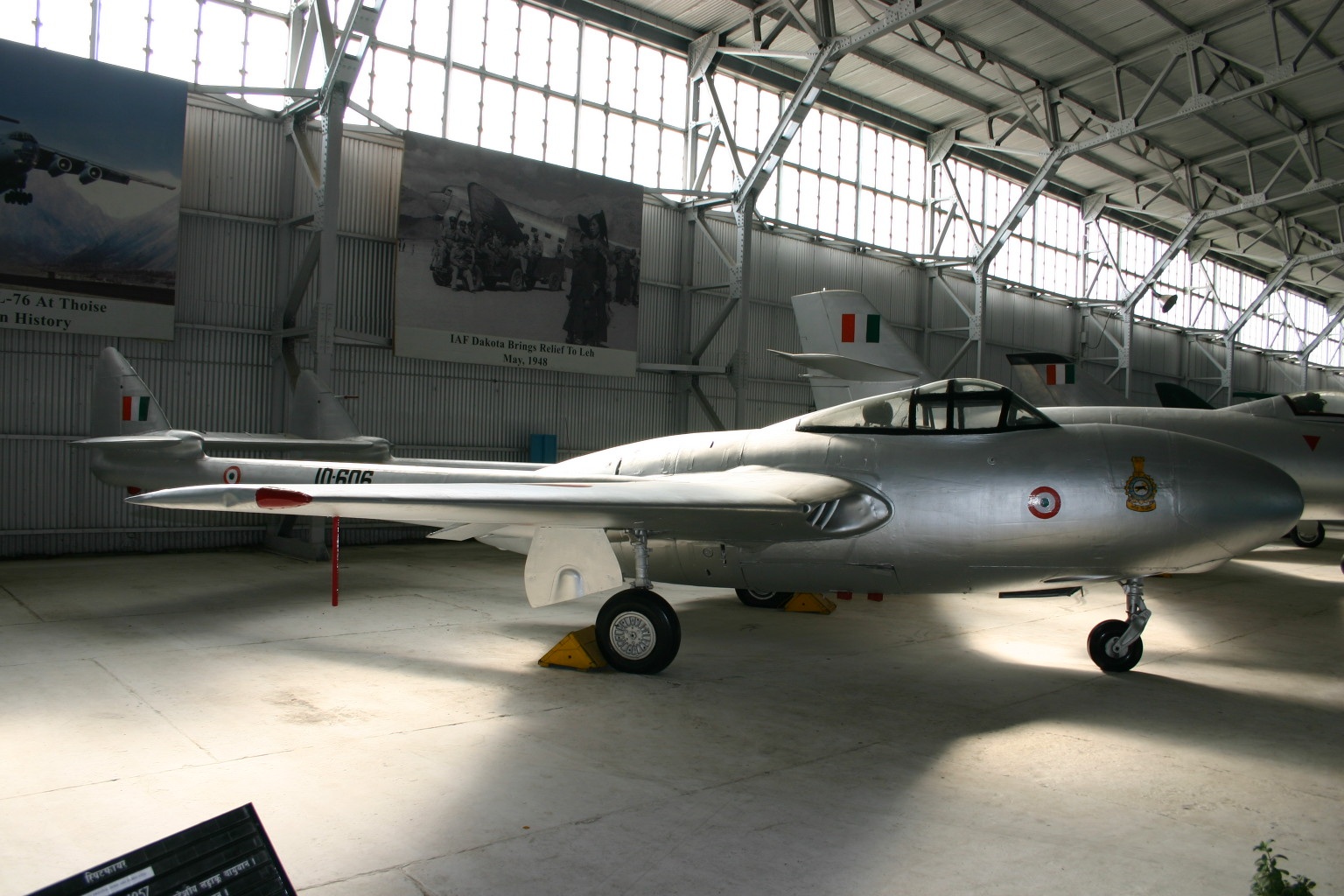
Photo: aeroprints, flicker.com
Modernization and technological leap
From the 1970s to the beginning of the 21st century, the Indian Air Force underwent a major modernization. Aircraft such as the MiG-21, MiG-23, MiG-27, SEPECAT Jaguar and Mirage 2000 formed its core. The MiG-21, first introduced into service in 1963, became the workhorse of the Indian Air Force. More than 800 aircraft were built under the HAL license and remained in service for six decades. The Mirage 2000 proved its precision-strike capabilities during the Kargil War in 1999, carrying out successful laser-guided bombing attacks at altitudes in excess of 15,000 feet. The MiG-29, introduced in the mid-1980s, provided India with an efficient air superiority fighter, later upgraded to the MiG-29UPG standard with advanced radar and avionics. The appearance of the Sukhoi Su-30MKI in 2002 marked a generational leap. Jointly developed by India and Russia, it is the Indian Air Force's primary multirole fighter, capable of long-range attacks and air dominance missions. With over 260 Su-30MKI in service, it forms the backbone of the Indian Air Force's fleet[6]. The introduction of 36 Dassault Rafale fighters between 2020 and 2022 has further enhanced the precision and deterrence capabilities of the Indian Air Force. Each Rafale can carry a payload of 9.5 tons, reach speeds of up to Mach 1.8 and operate advanced radars, electronic warfare systems and Meteor missiles with a range beyond line of sight[7].
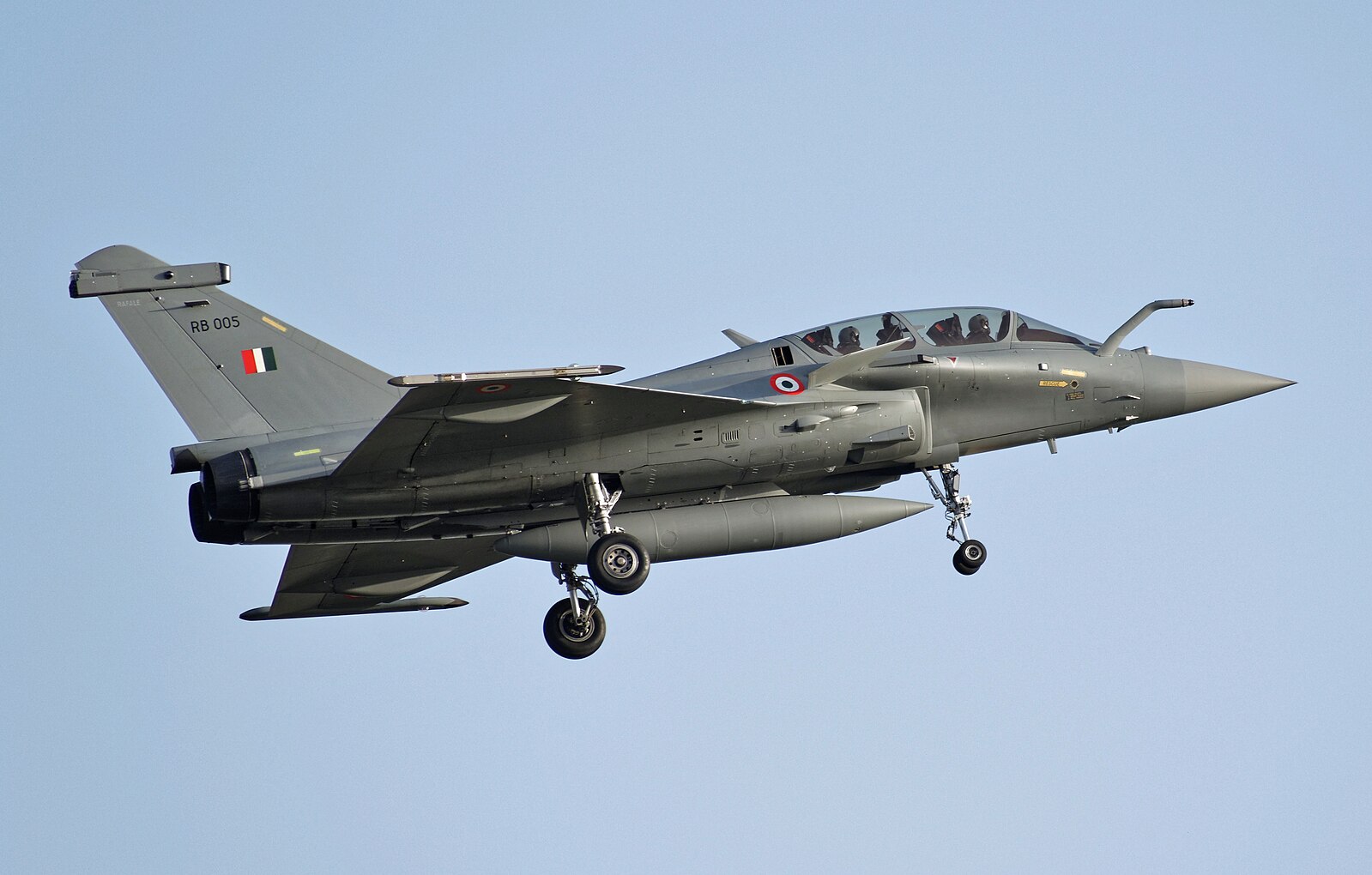
Photo: Dylan Agbagni, flickr.com
Air mobility and observation
Given India's vast land area and mountainous borders, air mobility is a key component of Indian Air Force operations. The Transport Command has about 250 aircraft, including 11 C-17A Globemaster III heavy transports, 12 C-130J Super Hercules tactical transport aircraft, 105 An-32 medium transport aircraft (many modernized) and 17 Dornier Do-228 light transport and reconnaissance aircraft. These aircraft are regularly used in humanitarian missions, evacuation operations, and rescue operations – such as the 2015 Nepal earthquake and the 2023 Sikkim flood. The Indian Air Force uses 6 Il-78MKI tankers for aerial refueling, and there are plans to purchase Airbus A330 MRTT aircraft. Observation and command functions are carried out by 3 Phalcon AWACS aircraft mounted on Il-76 platforms and 2 DRDO Netra AEW&C early warning and guidance aircraft based on the Embraer ERJ-145. These systems provide a 360-degree radar range over an area of more than 400 km and play a key role in integrated air defense. Unmanned operations are operated by IAI Heron and Searcher unmanned aerial vehicles, which will soon be supplemented by MQ-9B SeaGuardian drones, providing over 30 hours of flight time and enabling real-time reconnaissance in maritime zones[8].
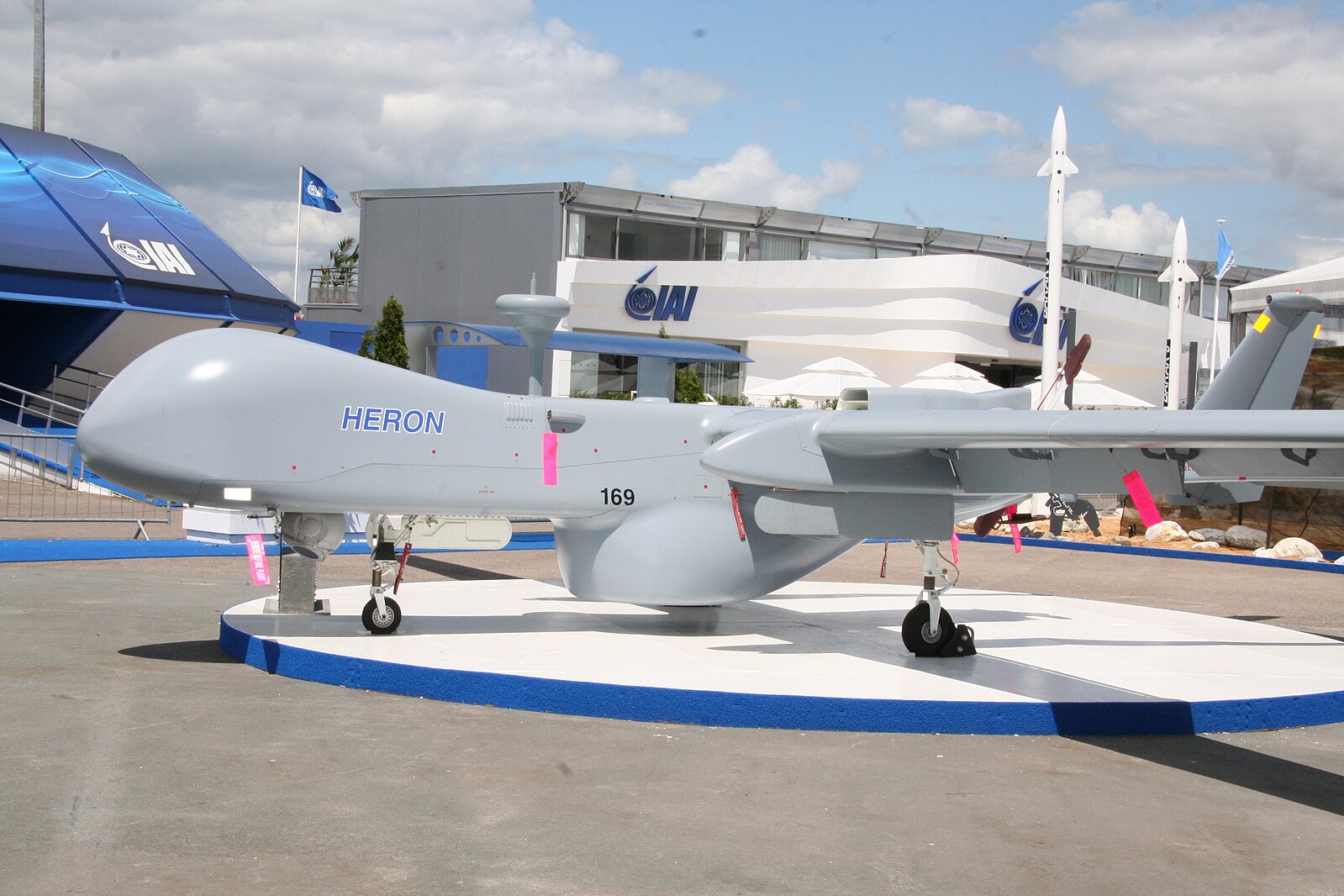
Photo: Georges Seguin, wikimedia commons
Helicopters
The Indian Air Force (IAF) has a fleet of more than 400 helicopters used for assault, transport and rescue operations. The Mi-17V5 is the backbone of the medium-range helicopter fleet.
with more than 220 units in service. Heavy cargo carrying capabilities are provided by 15 Boeing CH-47F Chinooks, capable of carrying 10 tons of cargo at an altitude of more than 15,000 feet (4,572 m) - crucial for operations in the Himalayas. Among the combat helicopters are 22 AH-64E Apache Guardians, equipped with Hellfire missiles and advanced missile launchers. The local HAL Dhruv and the Prachand light combat helicopter (LCH) strengthen India's ability to operate at high altitudes and counter insurgency, particularly along the northern borders. These platforms also support search and rescue missions (SAR), casualty evacuation (CASEVAC) and disaster relief, in partnership with the Army and Navy[9].
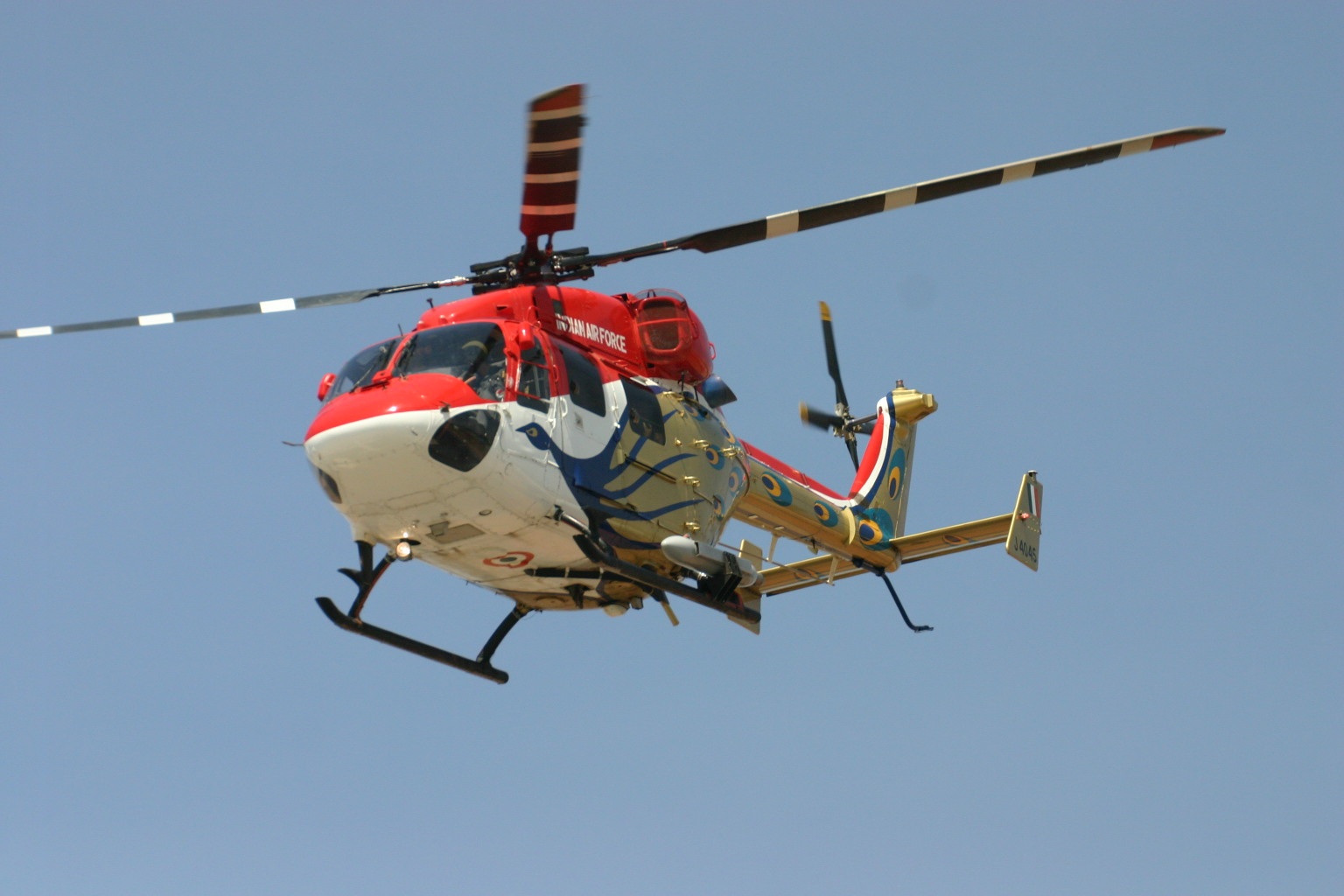
Photo: aeroprints, flicker.com
Training and international cooperation
The Indian Air Force (IAF) operates one of the most comprehensive flight crew training systems in the world. Initial pilot training takes place on Pilatus PC-7 MkII turboprop aircraft, followed by advanced training on BAE Hawk 132 jets. The Dundigal Air Force Academy trains pilots, and specialized institutions such as the Tactics and Air Combat Development Establishment (TACDE) hone advanced combat skills. International cooperation is the cornerstone of the Indian Air Force's operations. The Air Force regularly participates in exercises such as Red Flag (USA), Pitch Black (Australia), Garuda (France) and Desert Flag (UAE). In the country, the Air Force conducts large-scale exercises, such as Gagan Shakti and Vayu Shakti, involving thousands of combat flights to check combat readiness in real time[10].
Research, Industry and Development of Indigenous Peoples
The Indian aerospace industry, led by Hindustan Aeronautics Limited (HAL), DRDO, and numerous private partners, is supporting the modernization of the Indian Air Force. The HAL Tejas light combat aircraft (LCA), introduced into service in 2016, is India's first multirole fighter. Almost 100 Tejas Mk1A aircraft have been ordered, and deliveries will continue until the 30s of the 21st century[11]. Future programs include the Advanced Medium Combat Aircraft (AMCA) - a fifth-generation stealth fighter - and the Ghatak stealth unmanned aerial vehicle. IAF is also developing domestic radar systems, precision guidance munitions and hypersonic research vehicles in cooperation with ISRO and the Defence Research and Development Organisation (DRDO). These initiatives are designed to ensure technological independence and reduce dependence on foreign suppliers[12].
Budget and strategic perspectives
India's defense budget for the fiscal year 2024-2025 is about 6.21 trillion rupees ($75 billion). This funding supports the purchase of new aircraft, the modernisation of base infrastructure, and next-generation surveillance and space development measures[13].
In the face of growing regional tensions, especially with China and Pakistan, the Indian Air Force (IAF) is betting on the rapid modernization of its fleet and infrastructure. The defense budget for 2024-2025 allows for investments in new fighters, such as the locally produced Tejas Mk 1A, the development of the new generation AMCA aircraft, and the modernization of radar and air defense systems. At the same time, the IAF is developing space technologies, including constellations of communications and observation satellites, which increases the surveillance and integration capabilities of aerospace operations. Strategic investments in the self-sufficiency of the defence industry and advanced communication and command systems are intended to provide India with technological advantage and flexibility in territorial defence and power projection in the region[14].
[1] https://www.firstpost.com/web-stories/india/indian-air-force-day-2024-8-unknown-facts-about-indian-air-force-24526.html?utm - firstpost, story
[2] https://theprint.in/defence/iaf-lost-152-pilots-534-aircraft-in-crashes-in-past-30-years/1061936/ - IAF lost 152 pilots, 534 aircraft, in crashes in past 30 years,The Print
[3] https://www.mapsofindia.com/on-this-day/8th-october-1932-the-indian-air-force-comes-into-being?utm_ - 8th October 1932: The Indian Air Force comes into being-mapsofindia.com
[4] https://indianmilitaryhistory.org/india/iaf1965.html?utm - Indian Air Force Combat Squadrons in the 1965 War,indianmilitaryhistory.com
[5] https://www.bharat-rakshak.com/iaf/history/1971war/indian-air-losses-of-the-1971-war-unofficial-list/?utm -Indian Air Losses of the 1971 War (Unofficial List), .bharat-rakshak.com
[6] https://www.indiandefensenews.in/2020/06/sukhoi-su-30mkis-dassault-rafale-tejas.html?utm -Sukhoi Su-30MKIs, Dassault Rafale, TEJAS, Mirage-2000, Mikoyan-Gurevich MiG-29, MiG-21, SEPECAT Jaguar: The Indian Air Force Fighters, IndianDefenceNews
[7] https://defence24.pl/sily-zbrojne/indyjskie-rafale-w-komplecie?utm - Indyjskie Rafale w komplecie, Defence24
[8] https://www.makeinindiadefence.com/2025/05/indian-air-force.html?utm_ -Indian Air Force – History, Logo, Motto, Structure, Fighter Jets,makeindefence.com
[9] https://www.makeinindiadefence.com/2025/05/indian-air-force.html?utm_ - Indian Air Force – History, Logo, Motto, Structure, Fighter Jets,makeindefence.com
[10] https://www.pib.gov.in/PressReleaseIframePage.aspx?PRID=2025644&utm - AF CONTINGENT COMPLETES SUCCESSFUL PARTICIPATION IN EXERCISE RED FLAG 2024, pib.gov.in
[11] https://www.pib.gov.in/PressReleasePage.aspx?PRID=1688289&utm - Cabinet approves Procurement of 83 Light Combat Aircrafts (LCA) ‘Tejas’ from HAL for IAF, pib.gov.in
[12] https://www.indiandefensenews.in/2022/08/drdo-completes-development-trials-of.html?utm - DRDO Completes Development Trials of UTTAM AESA Radar, indiandefensenews
[13] https://www.idsa.in/publisher/issue-brief/defence-budget-2024-25-key-highlights?utm_ - Defence Budget 2024–25: Key Highlights, Manohar Parrikar Institute for Defence Studies and Analyses
[14] https://idrw.org/indian-air-force-set-for-massive-modernization-with-400-new-fighter-jets-by-2035/? – Indian air force set for massive modernization with 400 new fighter jets by 2035, Indian Defence Research Wing
Photo: Ur-1988, GoodFon.com
This article was prepared as part of the public task commissioned under the Government Programme for the Development of Civic Organizations 2018–2030: “Safe Poland of Tomorrow – strengthening the mission-driven activities of the Alioth Foundation.”
