
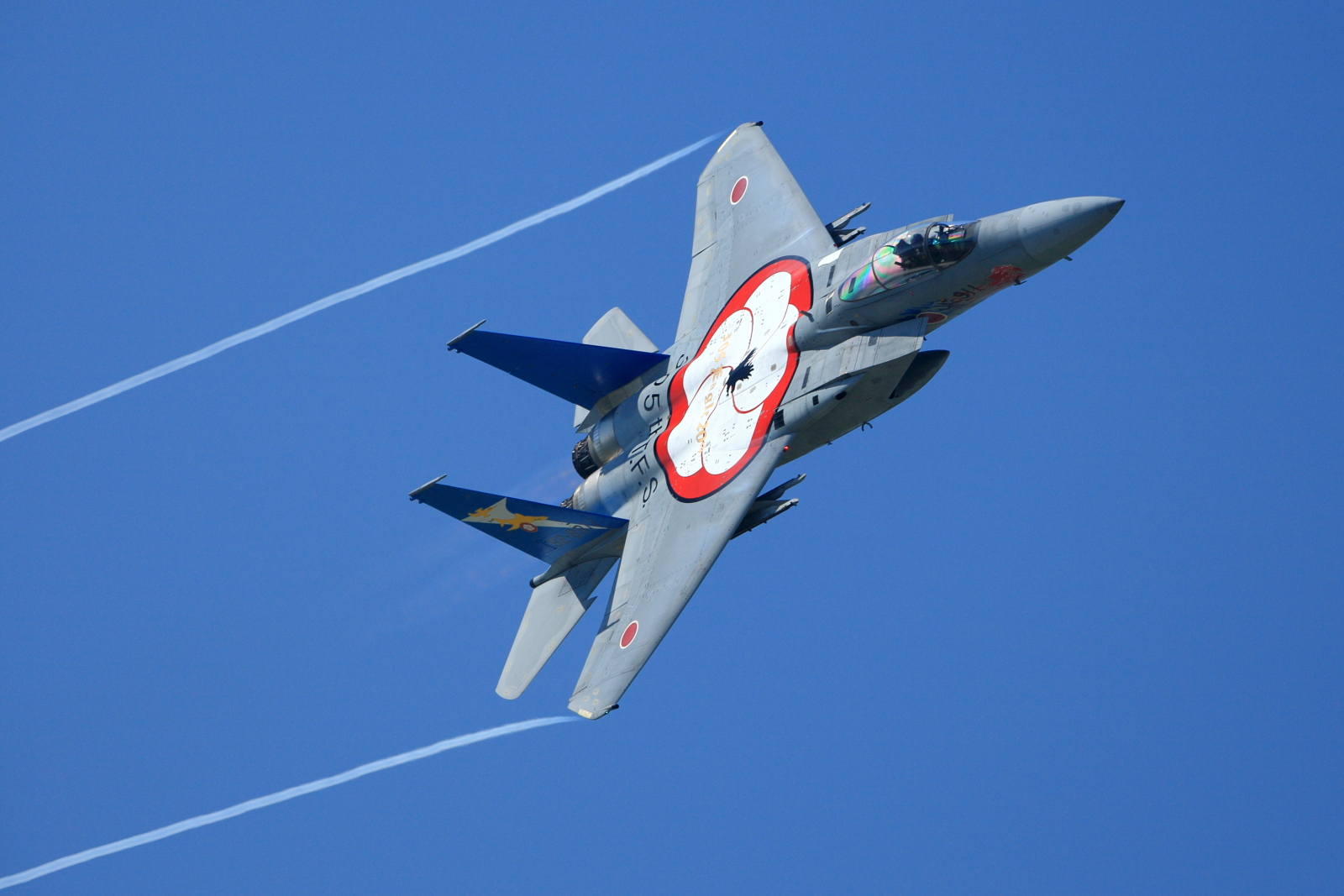
The Japan Air Self-Defense Forces (JASDF) is one of the most modern and best-equipped air forces in the world, known for its cutting-edge technology, high professionalism, and close cooperation with the United States. Created after World War II under Japan's pacifist constitution, the JASDF has evolved from a modest self-defense organization into a modern, multi-domain force, playing a key role in the defense of Japanese airspace and contributing to regional stability in the Indo-Pacific region.
Beginnings and formation
The JASDF was officially formed on July 1, 1954, as part of the Japanese Self-Defense Force, replacing the air forces of the Imperial Japanese Army and Navy, which had been disbanded after the war. In the early years of their existence, they relied heavily on American aircraft such as the F-86F Sabre, T-33 Shooting Star, and C-46 Commando transport aircraft.
In the 1960s, Japan began producing its own aircraft under license, introducing the F-104J Starfighter and later the F-4EJ Phantom II, which became the basis of Japanese air defense for decades. At the same time, Japan has developed a nationwide radar and command network to provide comprehensive airspace coverage, laying the foundations for a modern, integrated air defense system.
Modernization and development
An important milestone was the 1980s, when the F-15J Eagle, produced in Japan under license by Mitsubishi Heavy Industries, was introduced. The Japan Defense Forces (JASDF) currently operate more than 200 F-15J/DJ fighters, about 150 of which are in combat capability. The ongoing F-15JSI (Japan Super Interceptor) modernization program, launched in 2022, equips these aircraft with new AESA radars, advanced electronic warfare systems, and upgraded avionics to extend their service life into the 1940s.
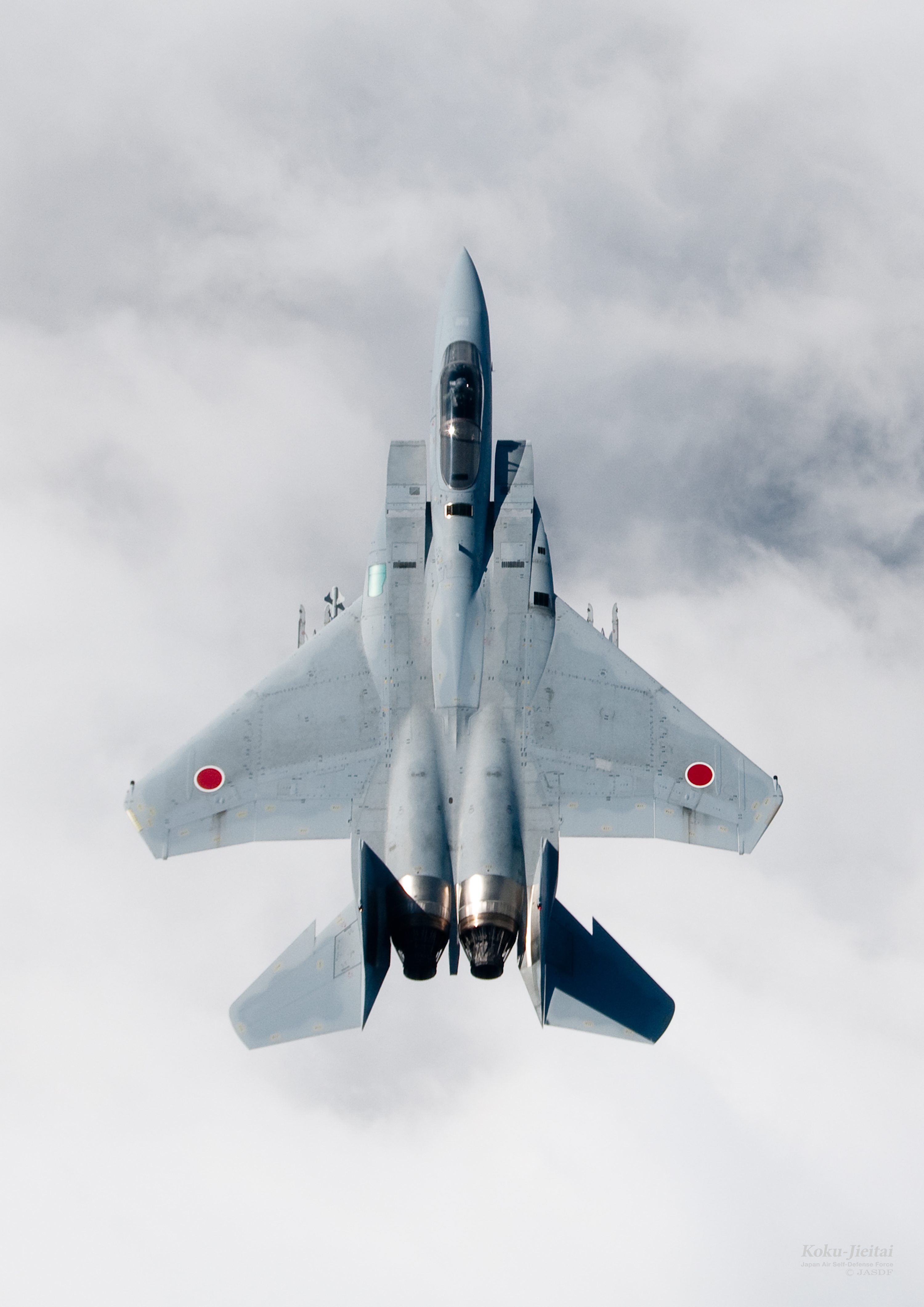
Photo: JASDF, www.mod.go.jp
At the beginning of the 21st century, Japan launched the F-2A/B multirole fighter, developed jointly with the United States on the basis of the F-16 design, but with larger wings, composite structures and advanced radar systems. About 90 F-2s remain in service, specializing in maritime strike missions and air defense.
The most groundbreaking purchase, however, turned out to be the F-35A Lightning II- a fifth-generation stealth fighter. Japan has ordered 105 F-35As and 42 F-35Bs in short take-off and vertical landing (STOVL) versions, the latter intended for deployment on Izumo-class aircraft carriers. By 2025, more than 60 F-35As have been delivered, which are already in service at Misawa and Komatsu bases, providing Japan with stealth, data fusion and network warfare capabilities in the region.
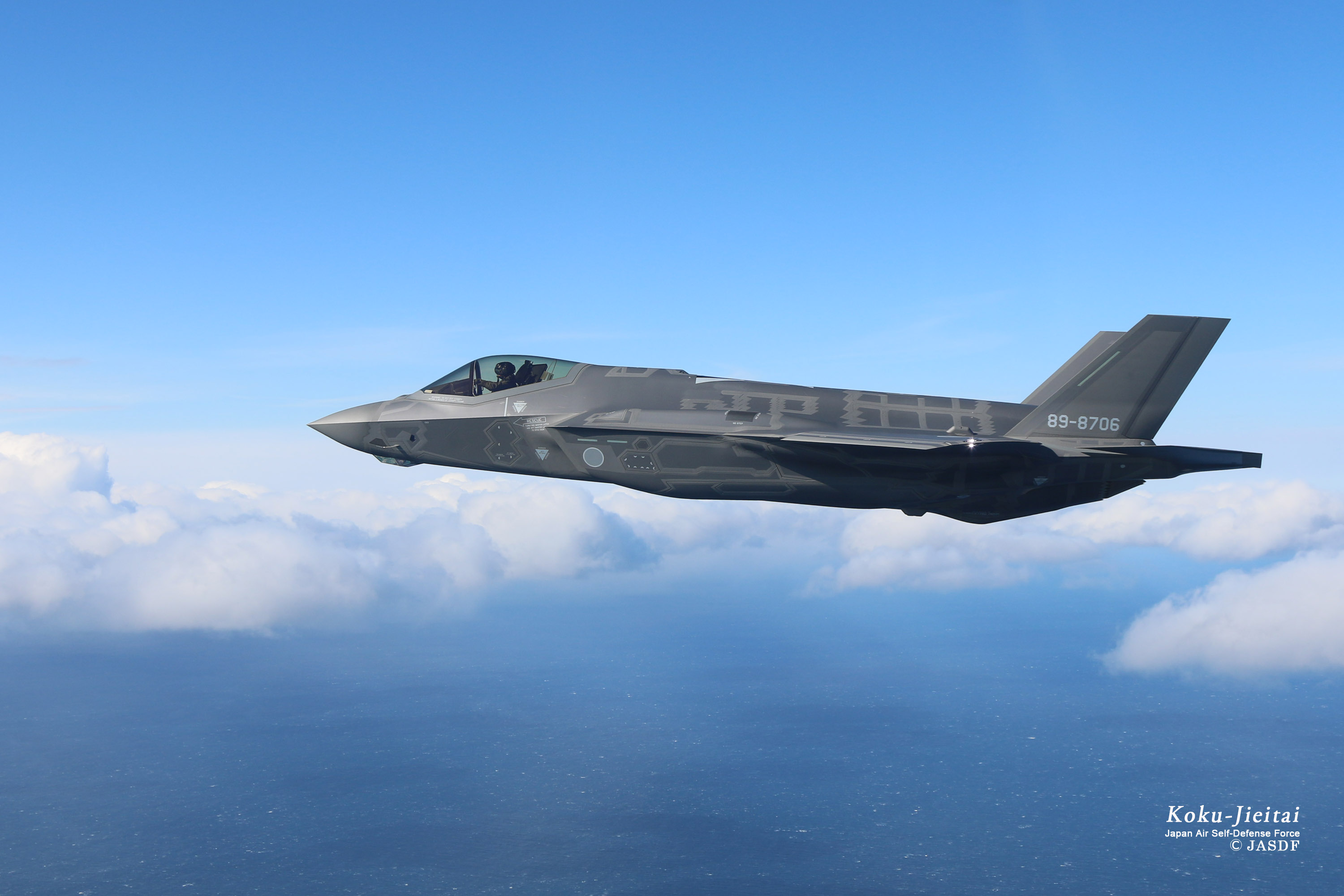
Photo: JASDF, www.mod.go.jp
Mobility, supervision and support
Given Japan's vast maritime territory and scattered islands, air transportation and surveillance capabilities are essential for national defense. The transport fleet includes 16 C-130H Hercules transport aircraft and 13 Kawasaki C-2 transport aircraft, capable of transporting 36 tons of cargo over a distance of 7000 kilometers.
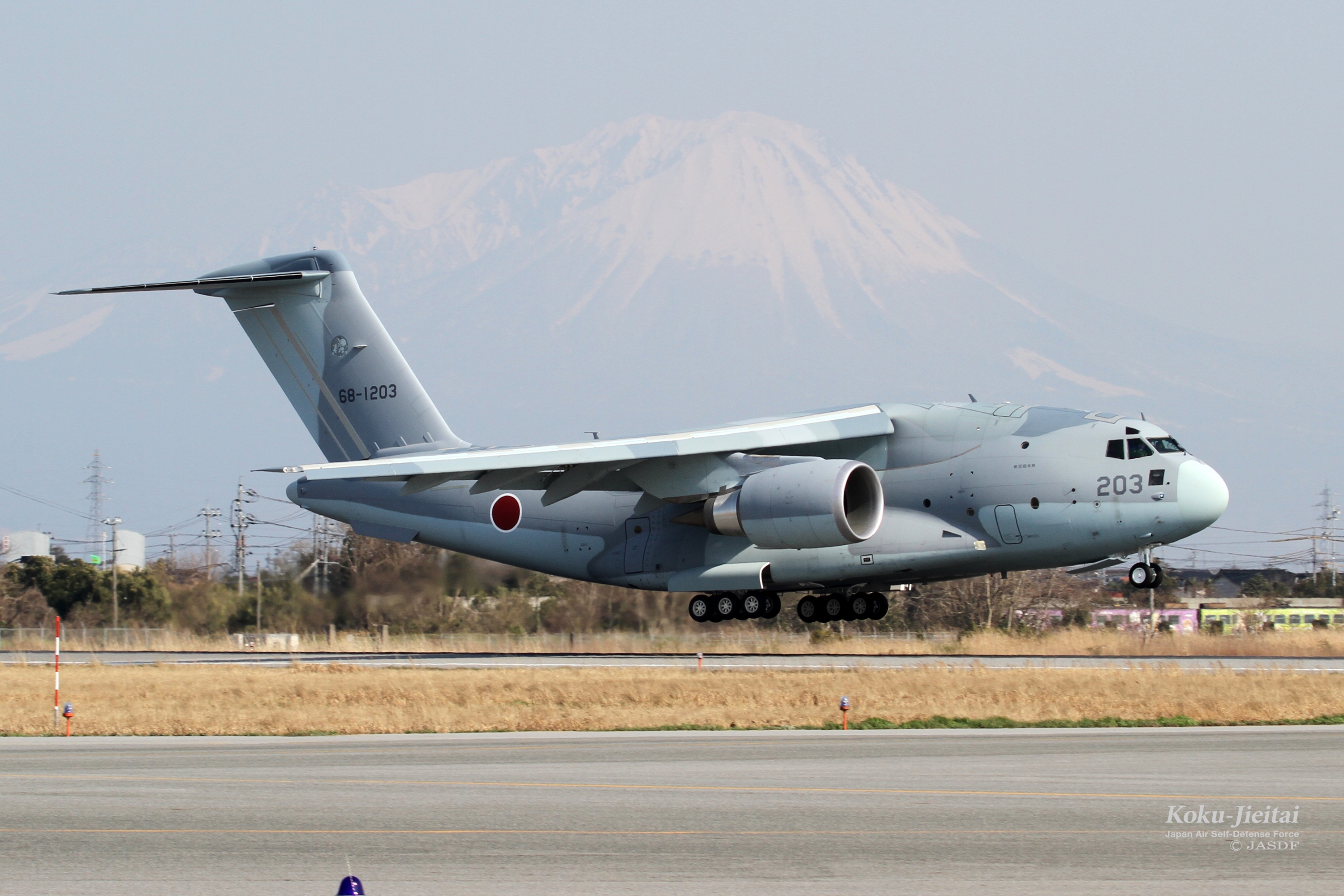
Photo: JASDF, www.mod.go.jp
4 KC-767 tankers and 6 KC-46A Pegasus tankers are responsible for aerial refueling, which increases the operational range of Japanese fighters and reconnaissance aircraft. Japan's early warning system is among the most modern in the world and is based on 4 E-767 AWACS aircraft (built on the Boeing 767 platform) and 13 E-2D Advanced Hawkeye aircraft, providing 360-degree radar range and command coordination.
The Japanese Air and Security Forces (JASDF) also operate 3 high-altitude, long-range RQ-4B Global Hawk drones for strategic surveillance. Plans for the future include the introduction of new loyal wingman unmanned combat aircraft, which will fly alongside the F-35 and the future F-X stealth fighter.
Helicopters
Although JASDF's main area of activity is jet aviation, helicopters play a key role in rescue, transport, and humanitarian operations. These forces use about 50 UH-60J Black Hawk helicopters for search and rescue (CSAR) missions and medical evacuation, as well as CH-47J Chinook heavy transport helicopters to transport cargo and troops. Additional EC-225LP Super Puma helicopters are used for search and rescue (SAR) and disaster response.
JASDF helicopters have participated in numerous humanitarian missions, including the 2011 Tōhoku earthquake and tsunami, as well as international relief efforts in Southeast Asia. The ongoing UH-2 multirole helicopter program, jointly developed by Mitsubishi and Subaru, aims to replace older aircraft and improve performance, safety and interoperability with other branches of the Self-Defense Force.
Training and international cooperation
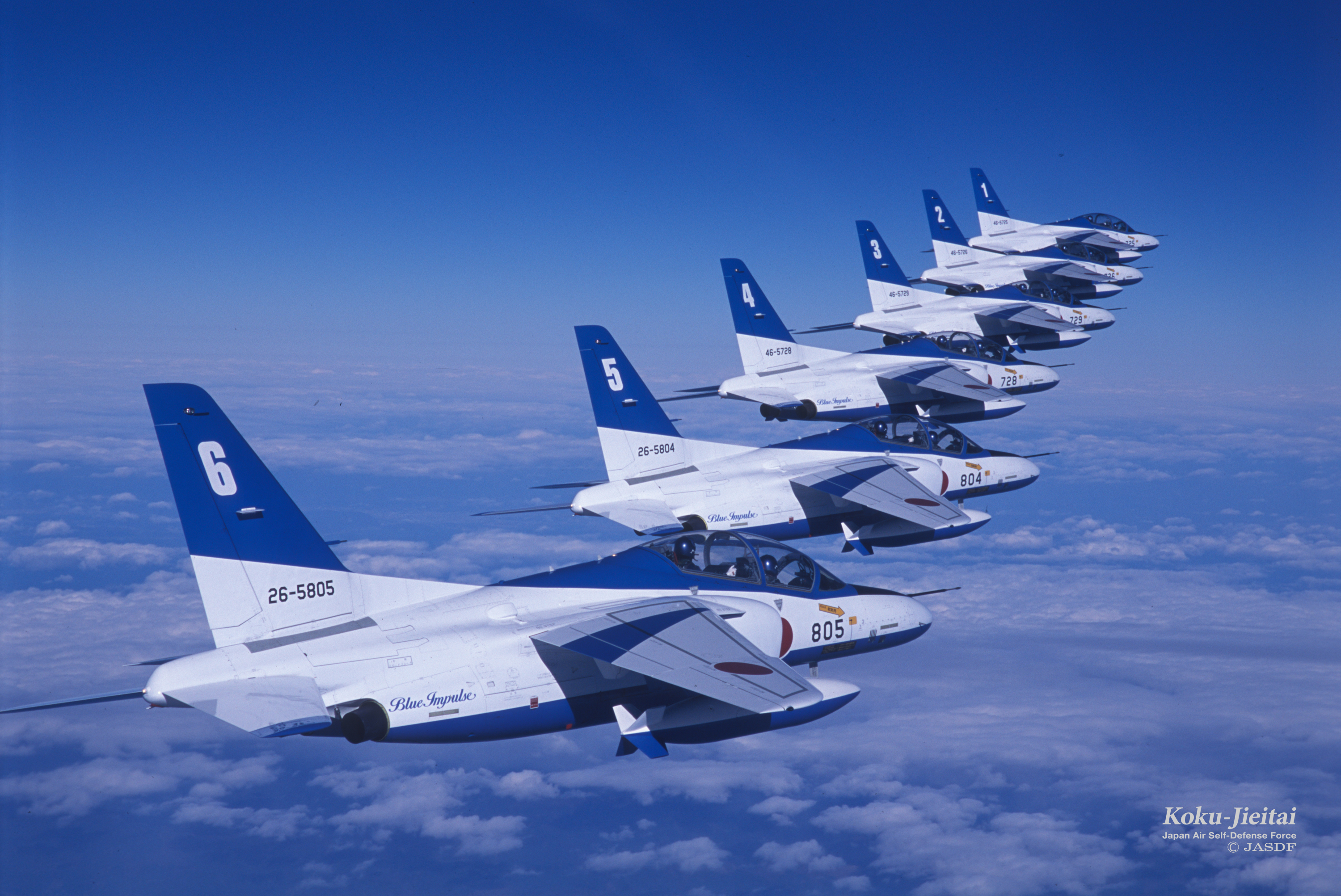
Photo: JASDF, www.mod.go.jp
Basic flight training takes place on Kawasaki T-4 jet trainer aircraft - about 200 of which remain in service - while advanced training takes place on F-15DJ or F-2B fighters and next-generation simulators for the F-35. The elite aerobatic team Blue Impulse, also flying the T-4, is a symbol of JASDF's precision and professionalism, performing at the most important national and international air shows.
Japan has an active schedule of international exercises, including at Cope North and KeenSword, Pitch Black and Red Flag Alaska, ensuring interoperability with U.S., Australian and allied air forces and maintaining readiness for complex joint operations in the Indo-Pacific region.
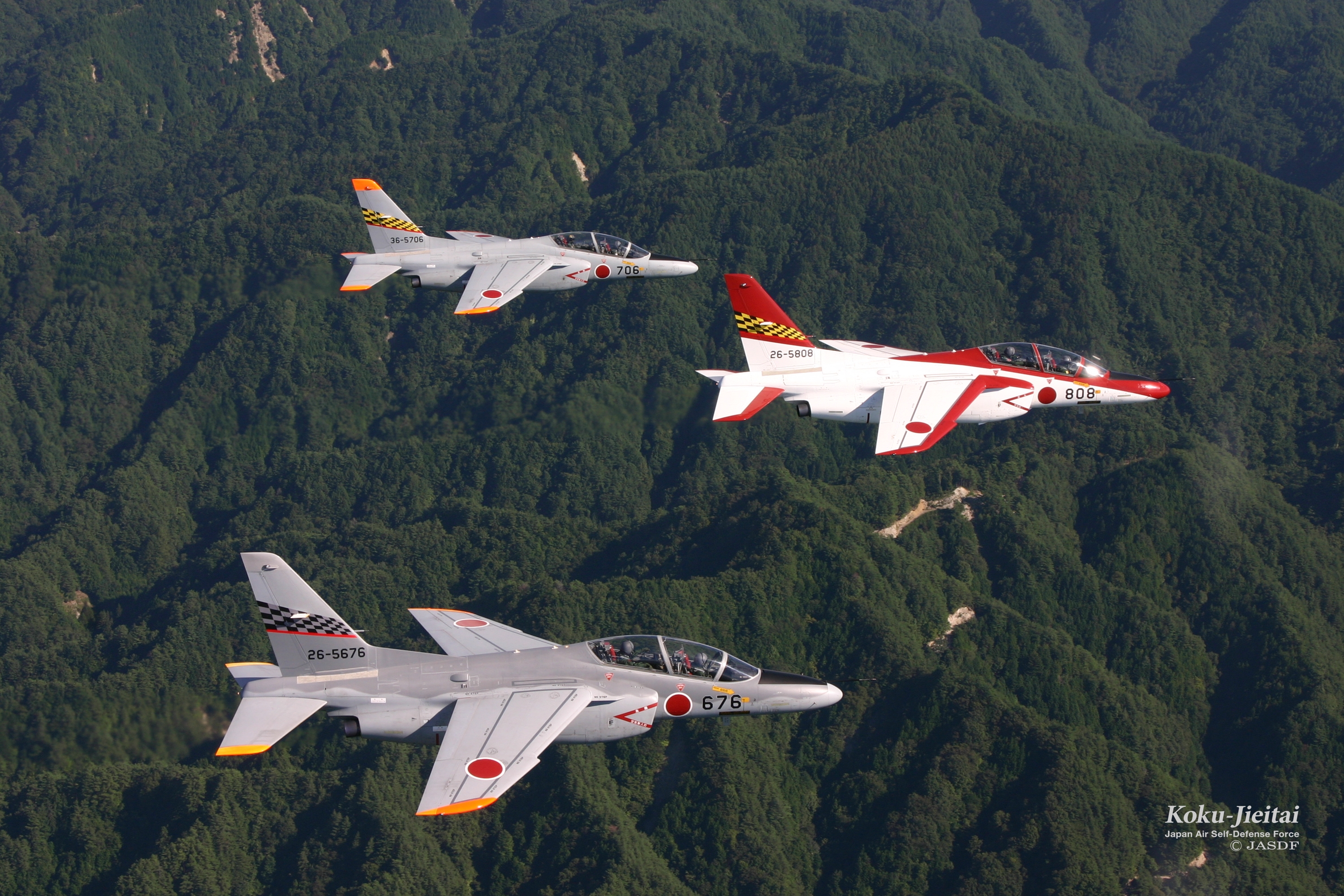
Photo: JASDF, www.mod.go.jp
New technologies and future developments
Japan's most ambitious defence project is the development of the sixth-generation F-X stealth fighter (formerly F-3), created as part of the Global Combat Air Programme (GCAP) – a joint initiative of Japan, the United Kingdom and Italy. The program aims to produce a next-generation aircraft that will replace Japan's aging F-2 fleet and provide a decisive technological advantage in the face of the growing threat from China and Russia. The project, led by Mitsubishi Heavy Industries in collaboration with BAE Systems from the UK and Leonardo from Italy, aims to develop a platform with great modernization potential and full interoperability with future Allied defense systems.
The first F-X prototype is expected to take to the air by 2028, and serial production is expected in the mid-2030s. The fighter will be equipped with state-of-the-art technologies: advanced stealth capabilities to minimize radar detectability; next-generation adaptive AESA radar capable of dynamically adjusting frequency and beam shape; AI-assisted pilot support systems designed to process sensor data and support real-time decision-making in combat; and the ability to control unmanned combat drones (the so-called "loyal wingmen") for reconnaissance or offensive missions. With these innovations, the F-X is expected to become one of the most technologically advanced fighters ever built, putting Japan on par with projects such as the U.S.'s Next Generation Air Dominance Program (NGAD) and the European Air Combat System (FCAS).
At the same time, Japan is expanding its space and cyber defense capabilities. The Space Operations Squadron, created in 2020, is responsible for monitoring orbital activity and protecting Japanese satellites from interference or attack. This marks the beginning of Japan's transition to multi-domain defense, integrating air, space, and cyber operations.
Budget and strategic perspectives
Japan's defense budget for fiscal year 2024-2025 reached a record 8.5 trillion yen (about $56 billion), nearly a third of which was earmarked for the modernization of the Japan Self-Defense Forces (JASDF), the development of the F-X, and the purchase of F-35 fighter jets. Japan plans to increase defense spending to 2% of GDP by 2027, the largest increase since the post-war era.
The strategic priorities of the Japan Self-Defense Forces (JASDF) emphasize deterrence through force, regional interoperability, and multi-domain integration. With a fleet of more than 760 aircraft and approximately 46,000 troops, the Japanese Air Self-Defense Force remains a central pillar of national defense and a cornerstone of the U.S.-Japan alliance in the Indo-Pacific region.
Japanese Aerospace & Defense Industry
The Japanese aerospace sector, led by Mitsubishi Heavy Industries, Kawasaki Heavy Industries and Subaru Corporation, forms the backbone of the Japanese Air Force (JASDF). These companies design, manufacture, and maintain most of Japan's air fleet, as well as develop advanced avionics, radar systems, and composite materials.
Through continued investment, the Japanese Air Force (JASDF) is constantly evolving to become one of the most technologically advanced and strategically significant air forces in the world, providing Japan with air superiority and contributing to collective security throughout the Indo-Pacific region.
Photo: Cp9asngf
This article was prepared as part of the public task commissioned under the Government Programme for the Development of Civic Organizations 2018–2030: “Safe Poland of Tomorrow – strengthening the mission-driven activities of the Alioth Foundation.”
