
This second part of the Orka for Poland report continues the comparative analysis of foreign offers for new submarines for the Polish Navy. It examines the proposals from France, Spain, Sweden, and Germany - four European defense powers, and concludes with an overall assessment of the strategic options available to Poland as it moves toward a long-awaited procurement decision.
Naval Group
The Scorpène-class submarines have been offered to Poland since the very inception of the Orka program and have featured in every stage of its development. Evidence suggests that around 2017–2018, negotiations had advanced to the point where a contract for these units was nearly signed. Ultimately, however, following a change of the Minister of National Defence, the acquisition did not proceed. At present, Naval Group is offering the Polish Navy the newest and most heavily armed variant of the Scorpène family, a class already in service with the navies of Chile, Malaysia, India, and Brazil, and more recently procured by Indonesia.
It is worth recalling, though often overlooked today, that the Scorpène design originated as a joint venture between the French and Spanish shipbuilding industries. This cooperation was rooted in a strategic decision by the French Navy at the end of the 20th century to operate exclusively nuclear-powered submarines. Despite this, the French shipbuilding sector was determined not to abandon its expertise in conventional submarine construction, recognising the strong potential for export markets.
This decision paved the way for a broad partnership between the Spanish shipbuilder Bazán (now Navantia) and its French counterpart DCN (now Naval Group) in designing and constructing new conventionally powered submarines of the Scorpène class. The collaboration resulted in the joint construction of units for Chile and Malaysia.
According to information provided by the French side, the Scorpène-class submarines proposed for Poland will not be equipped with an air-independent propulsion (AIP) system. Instead, they will feature a conventional propulsion arrangement comprising diesel engines, an electric motor, and battery systems. The distinguishing feature of the new variant will be the integration of lithium-ion batteries, replacing the traditionally used lead-acid batteries.
The manufacturer emphasizes that, owing to their acoustic signature, endurance in submerged operations, and combat capabilities—most notably the option of being armed with land-attack cruise missiles (Missile de Croisière Naval, MdCN)—Scorpène-class submarines represent an effective tool for conventional deterrence.
It must be noted, however, that no Scorpène-class submarine has yet been outfitted with MdCN missiles. To date, these have only been integrated with the French Navy’s nuclear-powered Suffren-class submarines. Nevertheless, given that Naval Group is the builder of both classes, and that in developing the Suffren-class SYCOBS combat management system it drew extensively on experience gained with the SUBTICS system used on the Scorpène, it can reasonably be assumed that the integration of MdCN missiles into the Scorpène platform carries relatively low technical risk.
Naval Group’s proposal for Poland is designed to ensure that the domestic defense industry achieves a high degree of autonomy in supporting and maintaining the new submarine fleet, thereby guaranteeing high operational availability over the vessels’ entire life cycle. To this end, the French company has committed to the transfer of key technologies and know-how to Poland, enabling comprehensive sustainment of the fleet.
This commitment is reinforced by Naval Group’s longstanding track record of developing and expanding local industrial capabilities for submarine construction and maintenance worldwide. This model has already been implemented in Malaysia, Brazil, and India, and is now being extended to Indonesia and the Netherlands. One of the company’s most recent achievements is its selection as the supplier of the ocean-going Blacksword Barracuda-class submarines for the Royal Netherlands Navy (Koninklijke Marine).
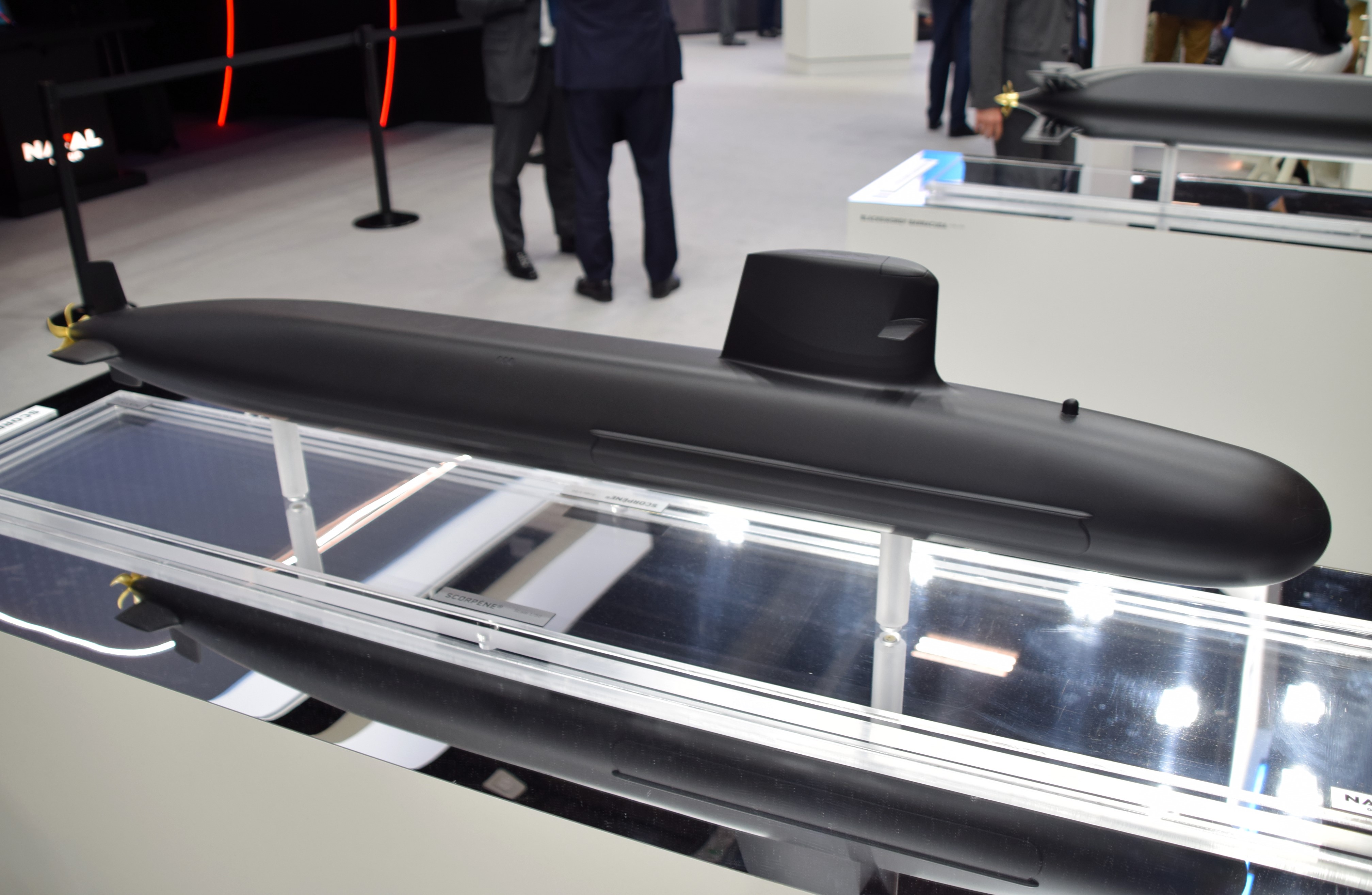
Zdjęcie: A. Nitka
Assessment of the French Proposal
Advantages:
- The company possesses extensive experience in the design and construction of submarines with both conventional and nuclear propulsion.
- The platform offers the potential for integration with MdCN cruise missiles developed by MBDA.
- The design represents a technically mature solution, with submarines of this class having been operated for many years by several navies worldwide.
- The vessels are equipped with lithium-ion batteries.
- Naval Group has considerable experience in cooperating with local industries in the joint construction of ordered submarines.
Disadvantages:
- The absence of a modern air-independent propulsion system which is currently regarded as a critical capability for effective and covert submarine operations. Lithium-ion batteries alone do not provide comparable submerged endurance.
- No NATO member state has thus far decided to acquire these submarines. The decision of the Netherlands to procure the more advanced Blacksword Barracuda class may indicate a comparatively lower technological sophistication of the Scorpène class.
Navantia
The Spanish shipbuilding group Navantia is currently constructing the S-80 Plus class submarines for its national navy, the Armada Española. These submarines were designed with long-duration missions in mind, including blue-water operations. Four units of this class were ordered on 24 March 2004.
During the construction phase in 2013, serious technical issues emerged concerning the vessels’ weight. A design error resulted in the displacement being 100 tons greater than planned, which posed a risk to the submarines’ surface buoyancy. To resolve this, assistance was sought from American specialists at Electric Boat in Groton. The revised design increased the submarines’ length from 71 to 81 meters by adding three new hull sections, which also raised their displacement from 1,740 to approximately 2,400 tons.
On 19 December 2018, a contract was signed for the delivery of these submarines to the Armada Española under the modified design, enabling the resumption of construction work. On 22 April 2021, at Navantia’s Cartagena shipyard, the prototype submarine Isaac Peral (S-81) was christened, with its technical launching taking place on 7 May 2021. The submarine began sea trials on 27 May 2022 and was formally commissioned on 30 November 2023.
The new Spanish submarines will be fitted with an air-independent propulsion system specifically developed for the class. The AIP is based on fuel cells provided by the American company UTC Power and uses hydrogen generated through the reforming of bioethanol fuel. The key component of this system, the bioethanol reactor, was developed by the Spanish firm Abengoa Innovation.
The AIP system, which will allow the submarines to remain submerged for up to three weeks, will first be installed on the third unit of the series, Cosme García (S-83). The first two submarines, Isaac Peral (S-81) and Narciso Monturiol (S-82), will be completed without it, with retrofitting planned during their first major overhaul. Current schedules anticipate the launch of Narciso Monturiol within this year, Cosme García in 2028, and Mateo García de los Reyes (S-84) in 2029.
Navantia stresses that, if Poland selects its offer, the country will receive a platform already tested by the Spanish Navy, capable of submerged operations exceeding three weeks due to its AIP system, and equipped with modern armaments, including the potential integration of Naval Strike Missile anti-ship missiles and Tomahawk cruise missiles in the future. The company highlights that the design offers excellent seakeeping and manoeuvrability in shallow waters.
Beyond the platform itself, Navantia is offering full technology transfer, crew and technical personnel training, and the possibility of further production in cooperation with the Polish shipbuilding industry. According to the manufacturer, training would be completed within one year. The company also pledges to transfer all maintenance capabilities to the Polish side. This would be achieved by establishing a strong partnership with a local shipyard, which would acquire the necessary expertise and later assume responsibility for sustaining the Polish submarines, working in cooperation with Navantia.
Recent media reports suggested that, should Poland opt for the S-80 Plus, one of the submarines currently under construction in Cartagena could be delivered to the Polish Navy as early as 2027, with a second vessel arriving only two years later. This arrangement would allow a smooth transition from training phases to the full operational readiness of the entire submarine squadron.
While such a scenario is undoubtedly attractive and would enable the use of European SAFE funding, it must be treated with caution. The information cited above originates not from Navantia representatives but from media sources. If confirmed, this would mean a significant delay in deliveries for the Armada Española, requiring the approval of the Spanish Ministry of Defence and renegotiation of existing contracts. Given that Spain currently operates only two active submarines, the aging Galerna (S-71) of the Agosta class and the recently commissioned Isaac Peral (S-81), such a solution appears highly improbable.
Assessment of the Spanish Proposal
Advantages:
- The submarine is a newly developed platform created in cooperation with international partners such as Babcock International and Lockheed Martin.
- The first unit has already been commissioned, which reduces the risk of so-called “teething problems.”
- The design allows for integration with Naval Strike Missiles and Tomahawk cruise missiles.
- The AIP system does not require hydrogen storage, as hydrogen is produced on board from bioethanol.
Disadvantages:
- The vessel is relatively large, designed primarily for extended missions including oceanic deployments.
- The AIP system is newly developed, has not yet been tested under operational maritime conditions, and will only be installed starting with the third unit in the series.
- Accelerated delivery would only be possible if submarines originally built for the Armada Española were redirected to Poland, which, given the current state of Spain’s submarine fleet, is highly unlikely.
Saab Kockums
The Swedish defense group Saab is offering Poland its next-generation A26 class submarines, currently under construction for the Swedish Navy (Svenska marinen). The program dates to 2010 but faced serious organisational challenges, requiring Sweden to regain control of the Kockums shipyard in Karlskrona by repurchasing it from the German company ThyssenKrupp. The program officially commenced on 30 June 2015 with a contract between the Swedish Defence Materiel Administration (Försvarets Materielverk – FMV) and Saab.
On 4 September 2015, the first steel was cut at the Saab Kockums shipyard for the initial A26 submarine. At that time, it was expected that two units would enter service between 2022 and 2024. These deadlines were not met, primarily due to extended research and development work, as well as additional requirements from the customer, such as integration of new torpedo systems (including the lightweight Saab Tp 47). The shipyard itself also required significant modernisation following its acquisition from German ownership in 2014.
On 27 August 2021, FMV and Saab signed a contract amendment that rescheduled deliveries of the two submarines, to be named Blekinge and Skåne, for 2027 and 2028 respectively. On 22 June 2022, the first two hull sections of the prototype were joined, an event regarded as the official keel laying. Today, the main hull blocks for the first submarine, including propulsion and weapons sections, are completed, while those for the second are nearly finished. Other modules are in advanced stages of assembly inside the Karlskrona shipyard.
Design requirements clearly indicate that the A26 class has been optimised for operations in the Baltic Sea, the same environment where Poland’s submarines are expected to operate. Nevertheless, their size, 1925 tons surfaced displacement and dimensions of 66.1 by 6.75 meters, also enable deployments in open seas and the North Atlantic.
For Baltic conditions, Swedish engineers focused uncompromisingly on reducing physical signatures. All machinery is mounted on flexible foundations, with power-generating units and AIP systems placed in soundproof capsules. The propulsion room and the command centre are mounted on separate, elastically supported platforms. This makes the vessel exceptionally quiet and extremely difficult to detect with passive sonar.
To minimise detectability by active sonar, the A26 class incorporates anechoic hull coatings that absorb and scatter acoustic signals. The sail structure, free of vertical surfaces, is shaped to diffuse sonar impulses, a hallmark feature of the class.
Equipped with sail-mounted diving planes and X-configuration stern rudders, the submarines will demonstrate excellent manoeuvrability and the ability to rest on the seabed, an important attribute for Baltic operations. Propulsion consists of an electric motor, three diesel-generator sets, and three Stirling engine-based AIP modules. This is the fourth generation of the Stirling AIP, offering not only greater stealth but also improved resistance to underwater shock effects from explosions.
Armament will include four 533 mm tubes for both heavy and lightweight torpedoes, which will leave the tubes under their own power rather than being expelled. The tubes will also be capable of launching mines and encapsulated missiles such as anti-ship weapons.
A unique innovation is the Multi Mission Portal (MMP), a 1.5-meter-wide and 7-meter-long lock chamber located between the torpedo tubes. It will allow the deployment of large, unmanned vehicles, equipment, or special forces personnel. Up to six to eight operators can be inserted simultaneously, providing a significant advantage compared to typical diver locks that accommodate only two personnel at a time.
Publicly available information regarding the Swedish offer for Poland remains limited. Saab has declared readiness to adapt the A26 design to Polish requirements, including the integration of missile systems. However, the company has noted that such modifications would be subject to additional costs borne by the Polish side. Delivery timelines for Poland have not been disclosed, as specific dates are included only in the official offer.
Saab also highlights ongoing industrial cooperation with Poland. Examples include contracts awarded to Remontowa Shipbuilding in Gdańsk for two Delfin-class intelligence ships, as well as the participation of Polish companies Base Group Sp. z o.o. and Famor S.A. in manufacturing A26 components. The former supplies steel structures for mechanical system platforms, while the latter provides operator consoles for control systems. Nevertheless, further details of potential cooperation under a submarine contract with the Polish Navy have not yet been made public.
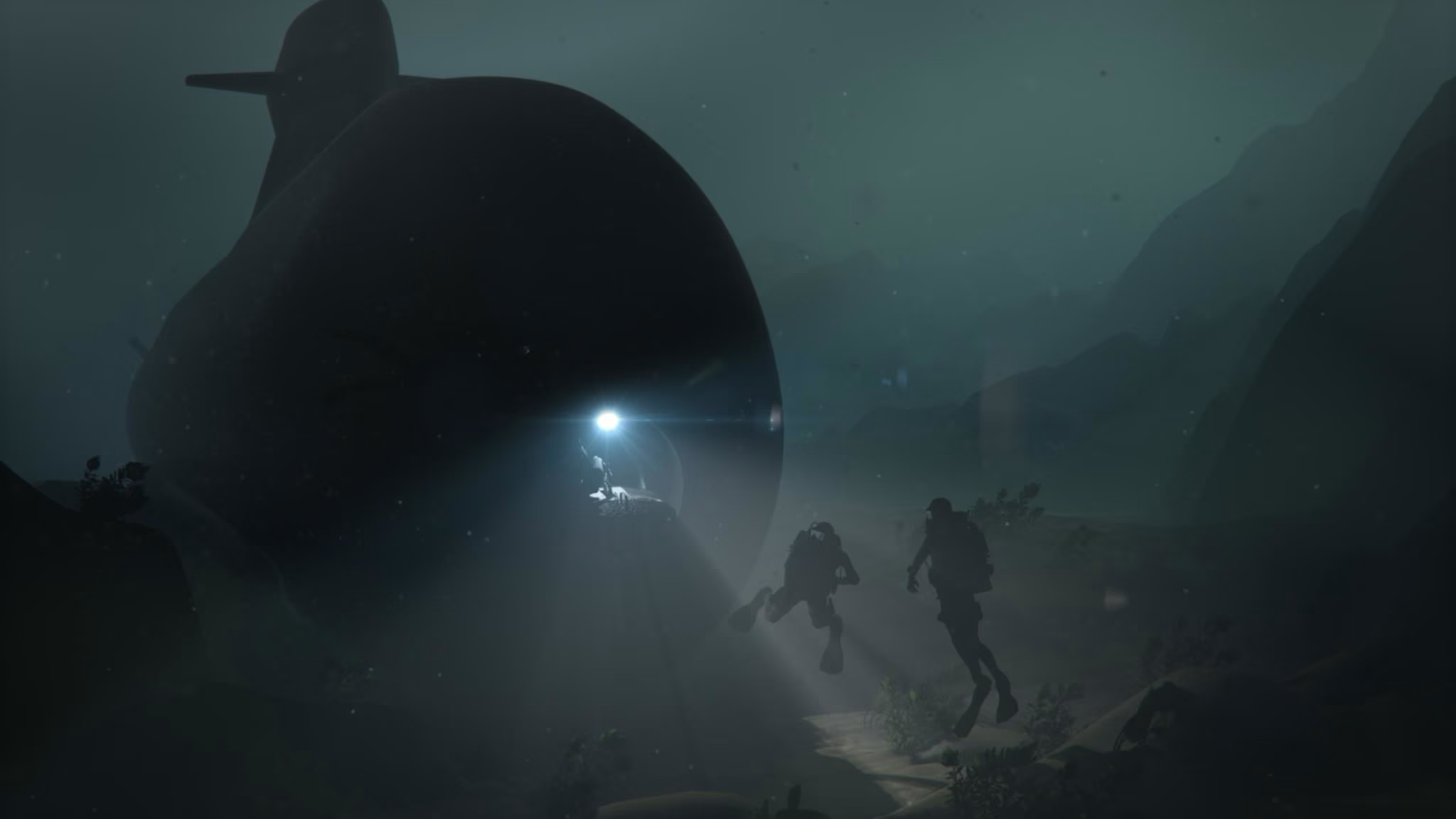
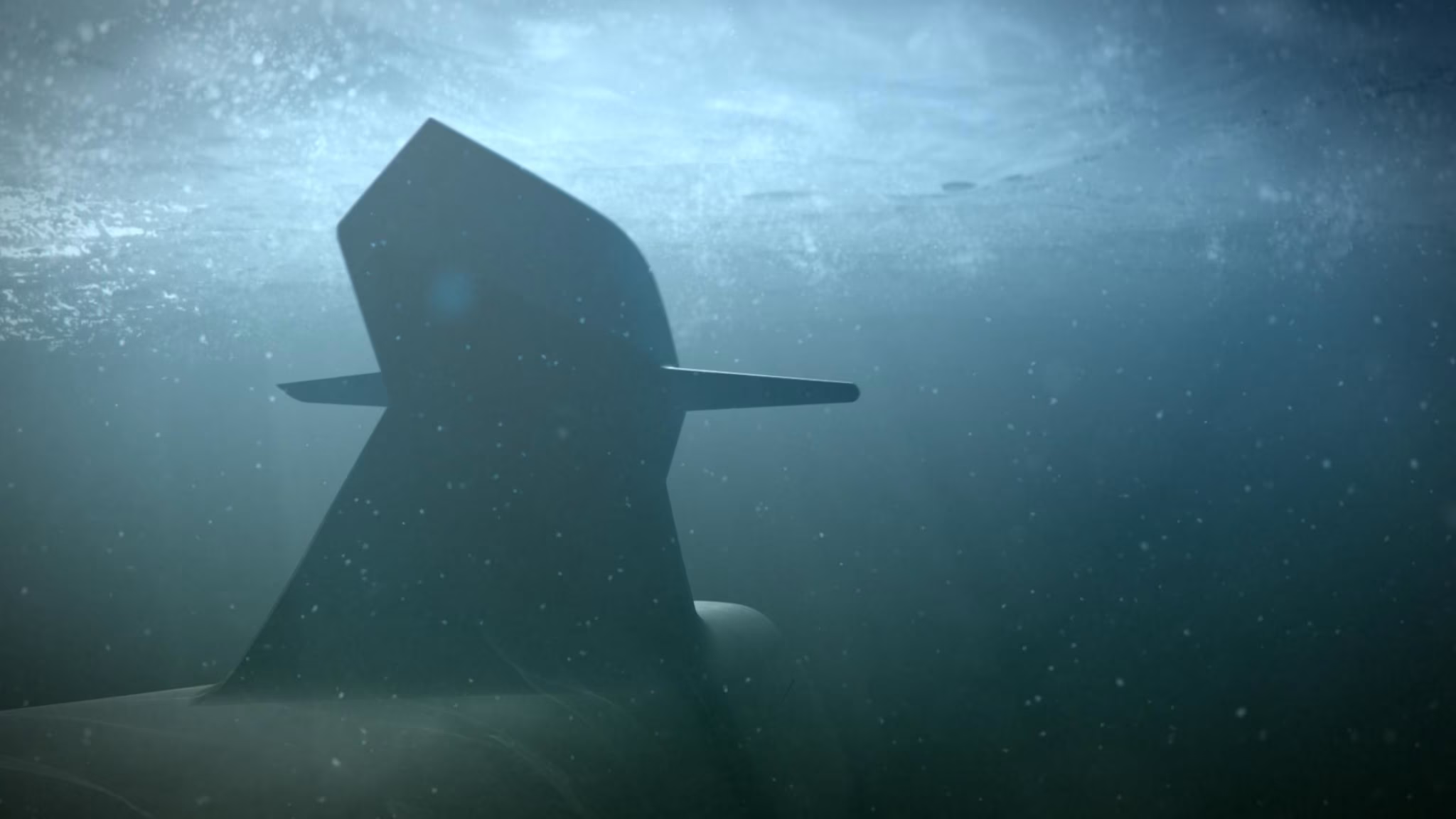
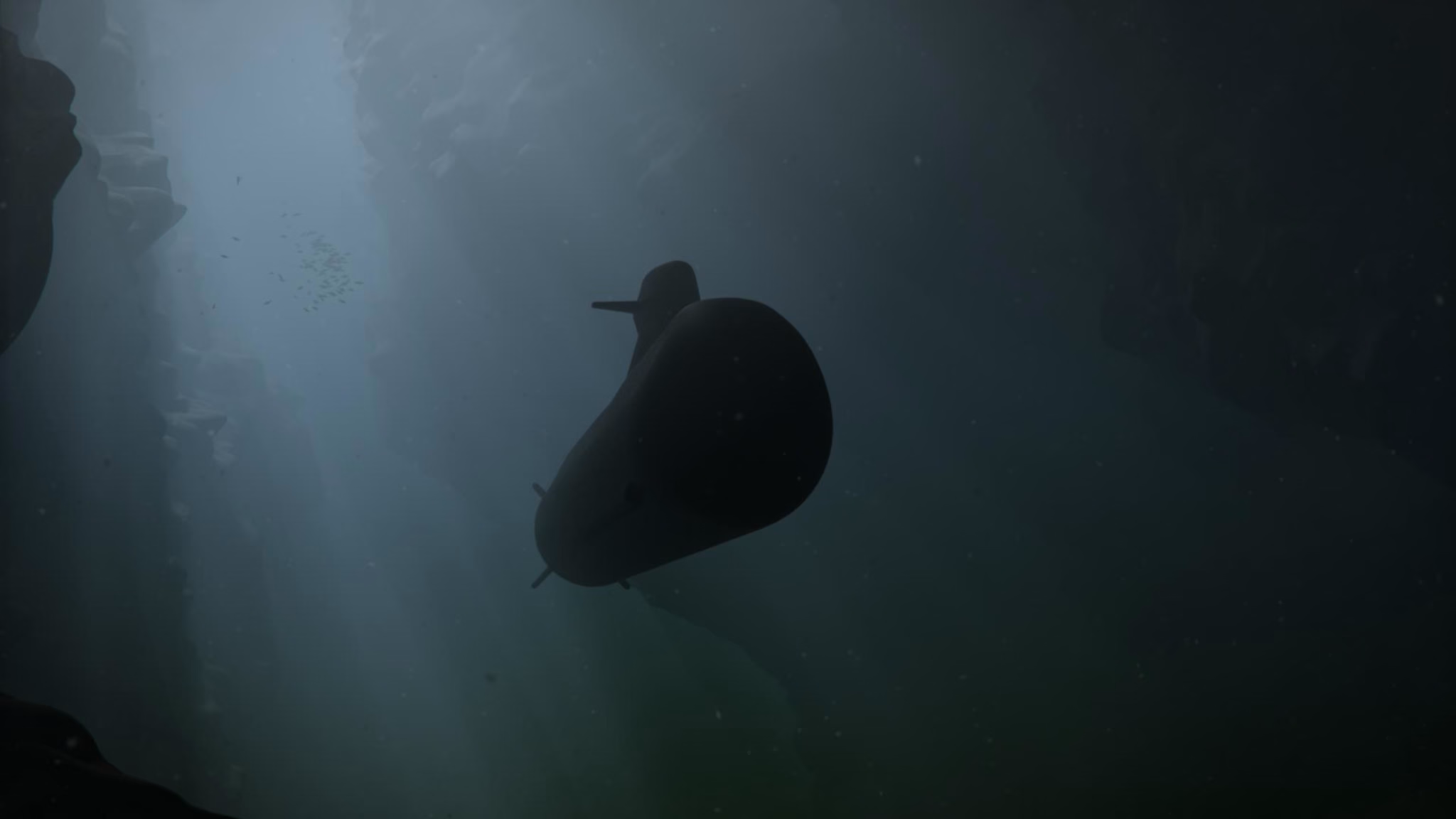
Zdjęcia: Saab AB
Assessment of the Swedish Proposal
Advantages:
- The submarine design has been optimised for operations in the Baltic Sea while maintaining the capability for expeditionary missions beyond this area.
- The next-generation Stirling engine-based AIP system extends submerged endurance.
- There is already existing industrial cooperation with Polish companies, which are producing components for the construction of A26 submarines.
Disadvantages:
- Delays in the construction of units for the Swedish Navy may result in longer lead times for export versions.
- Use of lead-acid batteries instead of modern lithium-ion cells.
- No official confirmation of the possibility of providing interim units in the form of one or two A17 (Södermanland) class submarines.
- The baseline version is not equipped with cruise missiles.
- A relatively low number of submarines ordered for the Swedish Navy could have a negative impact on unit costs.
TKMS
he German company TKMS, known until June of this year as thyssenkrupp Marine Systems, is offering Poland the acquisition of 212CD (Common Design) submarines. The firm is currently executing a program for the German Navy (Deutsche Marine) to build ten submarines of this class in cooperation with Norway, which has chosen the same platform for its fleet.
On 7 July 2021, Germany’s Federal Office of Bundeswehr Equipment, Information Technology and In-Service Support (BAAINBw) and Norway’s Defence Materiel Agency (NDMA) signed contracts with TKMS for the delivery of six 212CD submarines, four for the Royal Norwegian Navy (Sjøforsvaret) and two for the German Navy. The German submarines are to be constructed as the third and fifth units of the series, scheduled for delivery in 2032 and 2034. On 19 December 2024, BAAINBw signed an additional contract with TKMS for four more 212CD submarines for the German Navy, raising the total order for Germany to six vessels and, combined with Norway’s order, bringing the program total to ten.
Under the 2021 contract, the Royal Norwegian Navy will receive the first, second, fourth, and sixth units of the series. According to current plans, the prototype, already under construction, will be launched in 2027 and delivered in 2029. Subsequent units are scheduled to enter service in 2030, 2033, and 2035. Originally, Norway intended to replace its six Ula-class submarines with four 212CDs. However, the growing threats in the Euro-Atlantic theater led to a reassessment, with recommendations to procure a total of six submarines. To date, the contract for the two additional vessels has not yet been signed.
The German-Norwegian program also includes the establishment of a dedicated facility at Haakonsvern naval base in Norway, intended for training, support, and maintenance of submarines for both countries. The cornerstone was laid in December 2024, with the official opening planned for 2029.
The 212CD design builds on the proven and highly regarded 212A class submarines, already in service with both German and Italian navies, but represents a new generation of significantly larger vessels. The 212CD class will have a surfaced displacement of approximately 2,500 tons and hull dimensions of 74 by 10 meters. Notable innovations include a “diamond-shaped” cross-section of the light hull, designed to reduce acoustic reflections detectable by enemy active sonars.
The vessels will feature entirely new electronic systems and the ORCCA combat management system. Their armament will consist of six 533 mm torpedo tubes for DM2A4 Seehecht wire-guided heavy torpedoes. According to the manufacturer, integration is also possible with cruise missiles, NSM-SL anti-ship missiles, and the IDAS short-range air defense missile system. With the elimination of hydraulically assisted ejection, torpedoes will leave the tubes under their own power, while missiles will rely on boosters to exit the launchers and reach the surface before their propulsion systems engage.
The submarines will be equipped with the latest generation of air-independent propulsion, utilising proton exchange membrane fuel cells. On the 212A class, this technology already enabled submerged operations without atmospheric oxygen for nearly two weeks, while generating virtually no detectable physical signatures. The 212CD class will further enhance autonomy and stealth using lithium-ion batteries, which allow for faster charging and extended high-speed transits.
A key strength of TKMS lies in its extensive experience in submarine construction. Together with its predecessor HDW, the company has delivered dozens of units to over 20 navies worldwide. Among these, the 209 class has been the most popular, with 61 vessels built in numerous variants tailored to specific customer requirements. Many of these projects included technology transfers and local construction assistance.
In addition to the submarines themselves, the German offer includes industrial and shipbuilding partnerships in Poland. TKMS has pledged to transfer technology and know-how to enable local maintenance, repair, and overhaul capabilities, with the intention of establishing relationships based on equal partnership. The scope of participation by Polish companies remains under negotiation. The offer also encompasses training for both naval and shipyard personnel.
An integral part of the proposal is the possibility of providing Poland with a Norwegian 210-class (Ula) submarine as an interim solution. This would give the Polish Navy access to a modernised Western-built platform, ensuring continuity in training and operational capability until the delivery of new submarines. With this declaration, TKMS became the second bidder after Hanwha Ocean to officially commit to supplying an interim submarine to bridge Poland’s current capability gap.
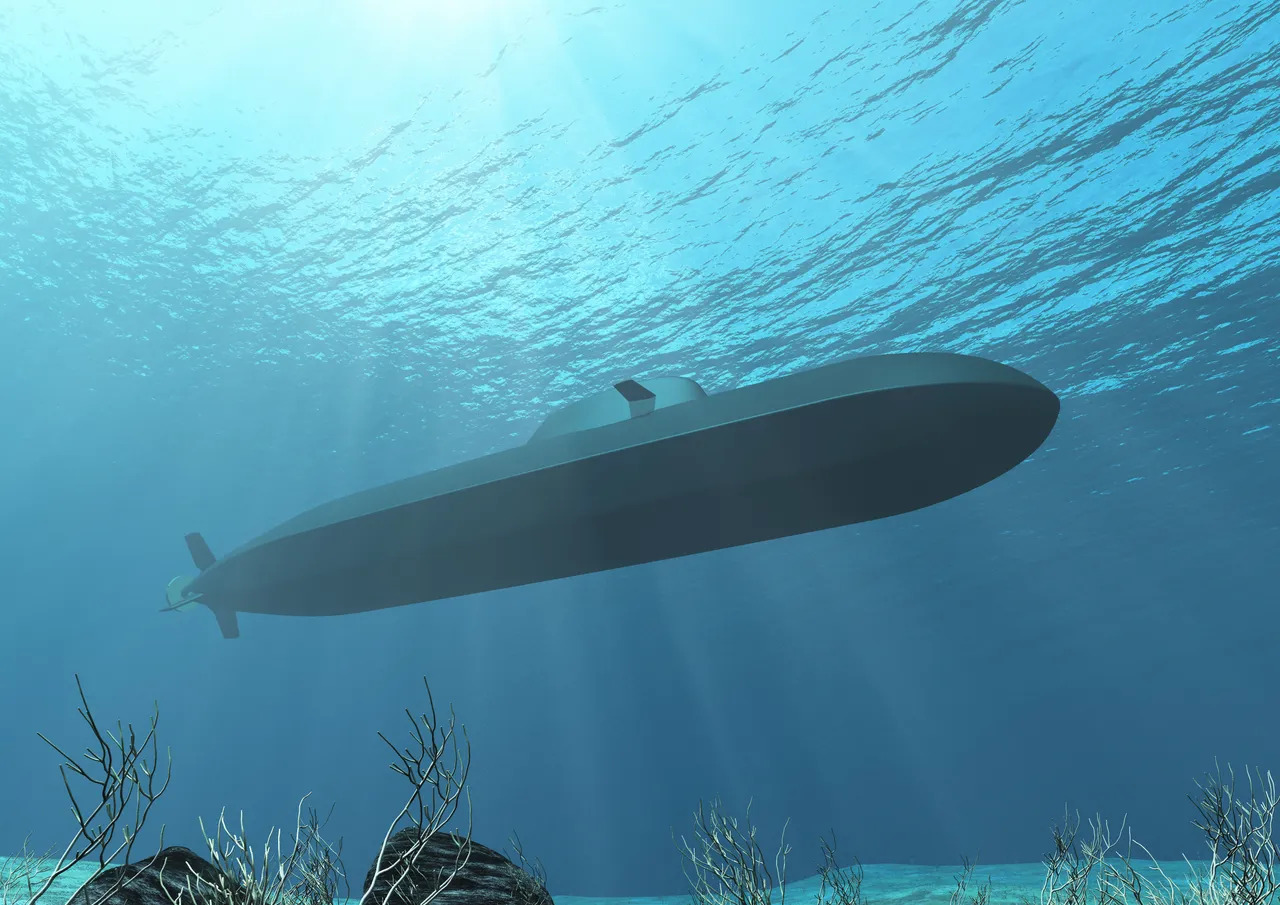
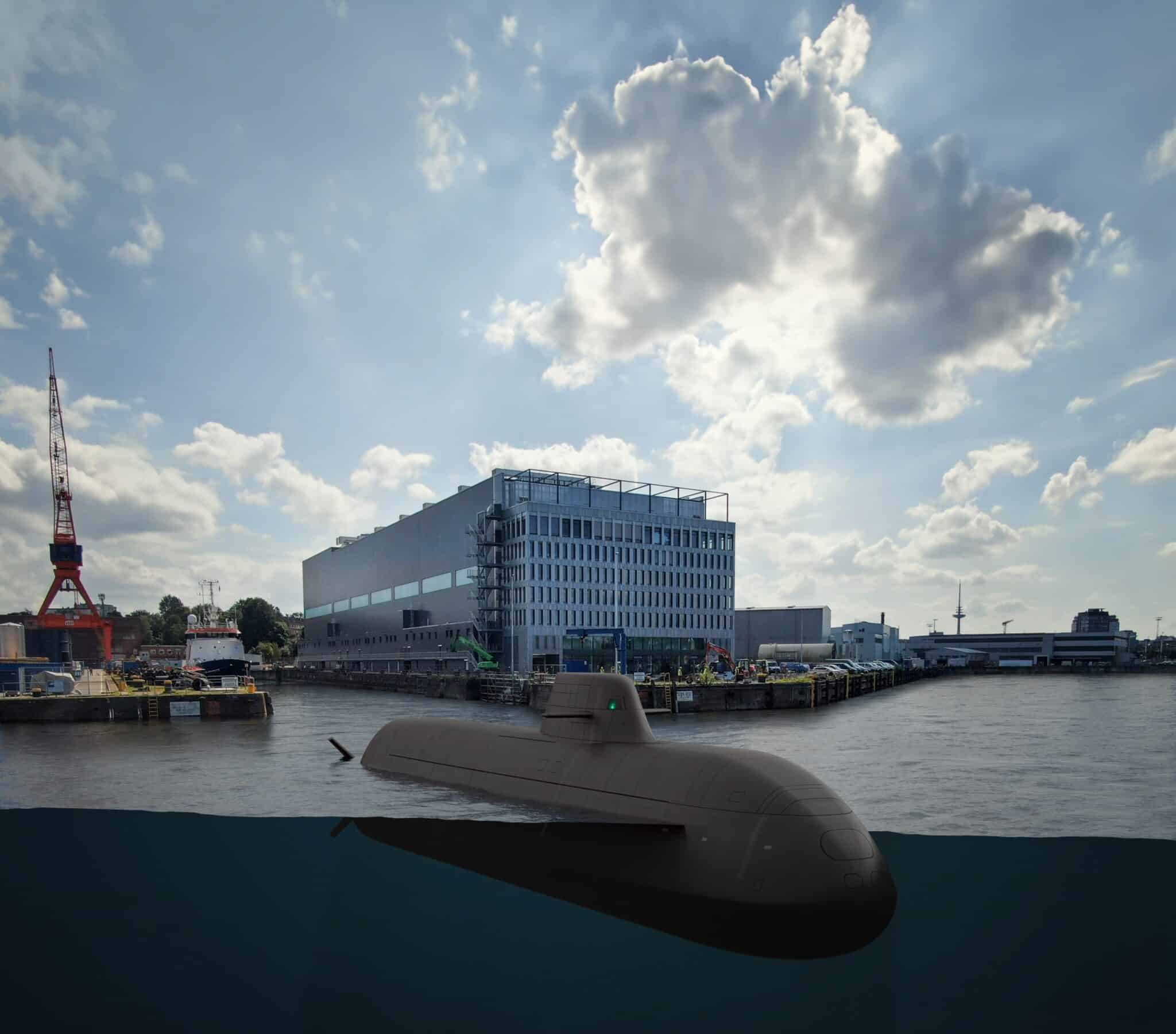
Zdjęcia: thyssenkrupp Marine Systems
Assessment of the German Proposal
Advantages:
- The supplier possesses extensive experience in the design and construction of submarines for naval forces worldwide.
- The program offers the possibility of participation in a joint effort with two NATO member states.
- An interim solution is included in the form of a Norwegian Ula-class submarine.
Disadvantages:
- The shipbuilder is already heavily engaged with existing contracts, including expanded orders for Germany and Norway as well as submarines for Israel and Singapore.
- The proposal is based on a newly developed design, which carries inherent risks of technical issues and integration challenges.
- Delivery timelines remain unspecified, and it is unclear whether Poland could take over any of the submarines already ordered by Germany or Norway.
- The maintenance and training center is to be in Norway, which may limit the possibility of establishing full domestic capabilities in Poland given the smaller scale of the planned procurement.
- The size of the vessels makes them more suitable for operations on open seas and oceanic theatres rather than in the confined waters of the Baltic.
Conclusions and Recommendations
Although the public, including the author of this analysis, does not have access to the full content of the offers submitted by foreign producers to the Armament Agency, nor to the scope of negotiations conducted at the level of the Ministry of National Defence, it is nevertheless possible to assess the proposed submarine designs and the general outlines of the offers. From such an assessment, the Italian company Fincantieri and its 212NFS class submarine emerge as the clear frontrunner.
At the outset, it is necessary to identify the outsider whose proposal should not be seriously considered in the Orka program. This is the offer from Hanwha Ocean, which has proposed KSS-III Batch 2 submarines for Poland. These platforms were designed in accordance with highly specific South Korean operational requirements, and it is difficult to expect that they could adequately meet Poland’s needs for a new generation of submarines.
The decisive factor disqualifying this offer lies in its political and strategic implications. Russia’s full-scale aggression against Ukraine has starkly demonstrated the reality of high-intensity warfare in Europe. Any such conflict would undoubtedly involve all branches of the armed forces, including naval forces, and would be conducted as a coalition effort under NATO. In such circumstances, the Polish Armed Forces could count on allied support, not only in terms of ammunition supply but also for repairs and overhauls of equipment, including naval assets. Choosing a supplier outside the NATO framework would deprive Poland of these assurances, reducing the deal to a purely commercial transaction.
South Korea itself faces a persistent threat of conflict with North Korea, combined with regional instability. Political uncertainty within South Korea may also adversely affect the execution of export contracts. The geographical distance between Poland and South Korea poses further challenges, especially in terms of technical support during a conflict in Europe in which Poland could be directly involved.
Moreover, Poland’s experience with acquisitions from South Korea, including K2 tanks, K9 howitzers, and FA-50 aircraft, has not been encouraging. These programs have demonstrated a low degree of localisation and limited adaptation to Polish requirements, particularly in the case of the aircraft. This does not bode well for the acquisition of a far more complex weapon system, such as submarines.
Turning to offers originating from NATO states, it must be emphasised that air-independent propulsion is an indispensable feature of modern submarines. Without it, vessels of this class stand little chance of survival. For this reason, the absence of AIP in the Scorpène design, as well as its prototype status and future availability in the case of the S-80 Plus, effectively disqualifies it.
The potential option of equipping these platforms with cruise missiles cannot offset this deficiency. First, such integration would entail additional costs for Poland, since no Scorpène-class submarine has ever been armed with MdCN missiles, while integration of Tomahawks on the S-80 Plus remains theoretical. Second, Poland would essentially be pioneering such an effort, whereas the Netherlands has already decided against integrating torpedo-tube-launched cruise missiles into its newly ordered Blacksword Barracuda class.
Furthermore, in the context of the operational environment in which the Polish Navy must function, it is debatable whether the ability to carry and launch a small number of cruise missiles should be considered decisive. The primary mission set of conventional submarines continues to revolve around torpedo armament. Cruise or ballistic missile capability should be seen as a valuable addition but not a determining factor.
This narrows the field to the three proposals most highly rated by the Armament Agency. Among these, the German offer from TKMS must be viewed critically. The company proposes the 212CD class, a larger variant under construction for Germany and Norway. TKMS representatives argue that Poland should be offered the latest design rather than the smaller 212A class, which has proven effective even in the Baltic. In reality, the rationale may be different: TKMS has shifted its industrial base to focus on the 212CD line, phasing out production of the 212A. Offering the 212CD to Poland aligns with the company’s interests, not necessarily with Poland’s. The larger size of the 212CD makes it more suitable for oceanic rather than Baltic operations, while also making it more expensive.
By contrast, the Swedish offer appears more attractive in concept. The A26 class represents a modern design optimised for Baltic operations. However, delays and persistent challenges in its development cast doubt on delivery timelines. Saab’s production capacity is limited and currently directed toward the construction of two A26 submarines for Sweden’s own navy. Should Sweden decide to order additional units, the availability of production slots for export could be jeopardised.
Against this background, the Italian proposal stands out as the most compelling. Fincantieri’s 212NFS class submarines align closely with Poland’s operational requirements in terms of size, propulsion system (fuel cells combined with lithium-ion batteries), and mission profile. Moreover, this would represent Fincantieri’s first submarine export contract, offering Poland leverage to negotiate favourable terms. The proposal also provides for significant industrial cooperation, the possibility of acquiring an interim unit, and in the longer term, access to the next generation of submarines. For these reasons, the Italian offer is the most recommendable option for the Polish Navy.
The final evaluation confirms that the Orka program is not merely a question of fleet renewal, but a decisive step toward enhancing Poland’s maritime security and industrial independence. As the analysis indicates, the Italian 212NFS class submarines appear to align most closely with Poland’s operational needs and strategic objectives. Regardless of the final selection, the Orka program represents a landmark opportunity to rebuild Poland’s undersea capabilities and strengthen its role within NATO’s collective defense framework.
Author: Andrzej Nitka
Download our publication in Polish.
This article was prepared as part of the public task commissioned under the Government Programme for the Development of Civic Organizations 2018–2030: “Safe Poland of Tomorrow – strengthening the mission-driven activities of the Alioth Foundation.”
