
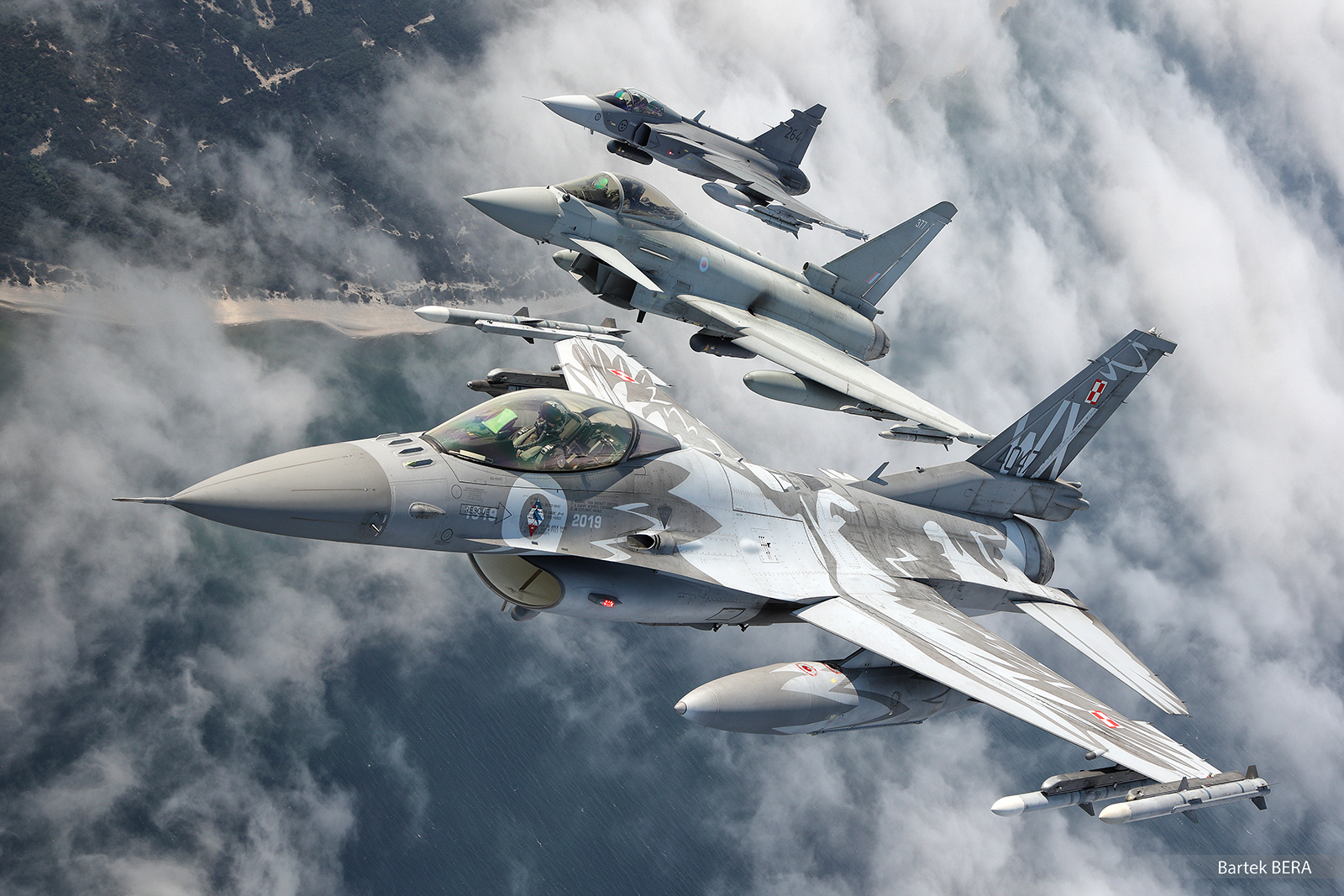
On Monday morning, the airports in Rzeszów-Jasionka and Lublin were temporarily closed. However, the difficulties in civilian traffic were the result of planned military actions - the Operational Command of the Armed Forces confirmed the conduct of air and security operations in this area.
The decision to suspend operations at the airports was made around 6:00 a.m. and was dictated by the need to ensure full freedom of action for Polish and allied aviation. The Operational Command deployed pairs of patrol fighters, launched ground-based air defense systems and radar reconnaissance systems. After about ninety minutes, military operations ended and civilian airports resumed normal operations.
The Polish Air Navigation Services Agency (PANSA) informed that the temporary suspension of flights was preventive and was carefully coordinated with the military. Thanks to the effective cooperation of civil and military institutions, the difficulties were minimized – after the end of operations, the airports managed by PANSA returned to normal functioning.
This incident proves that Polish airspace is increasingly used not only for civilian purposes, but also for military operations. Activity around airports indicates that aviation safety is now being prioritized, and both military and civilian aviation services need to be prepared to quickly transition between normal operations and a state of heightened alert.
In the face of growing regional tensions, international cooperation is also taking on a new meaning. Poland works closely with NATO partners, and the presence of allied aircraft in Polish airspace underlines the country's role as an important element of the European defence system.
While the military action may have raised concerns among travelers, the rapid reopening of airports shows that coordination between institutions is effective and that the security threat response system is functioning properly. In the long term, such incidents may become part of a new normal – in which the threats resulting from conflict will no longer concern the future, but will become a real factor affecting the day-to-day functioning of civilian infrastructure.
Photo: Bartosz Bera | zoom.mon.gov.pl
This article was prepared as part of the public task commissioned under the Government Programme for the Development of Civic Organizations 2018–2030: “Safe Poland of Tomorrow – strengthening the mission-driven activities of the Alioth Foundation.”
